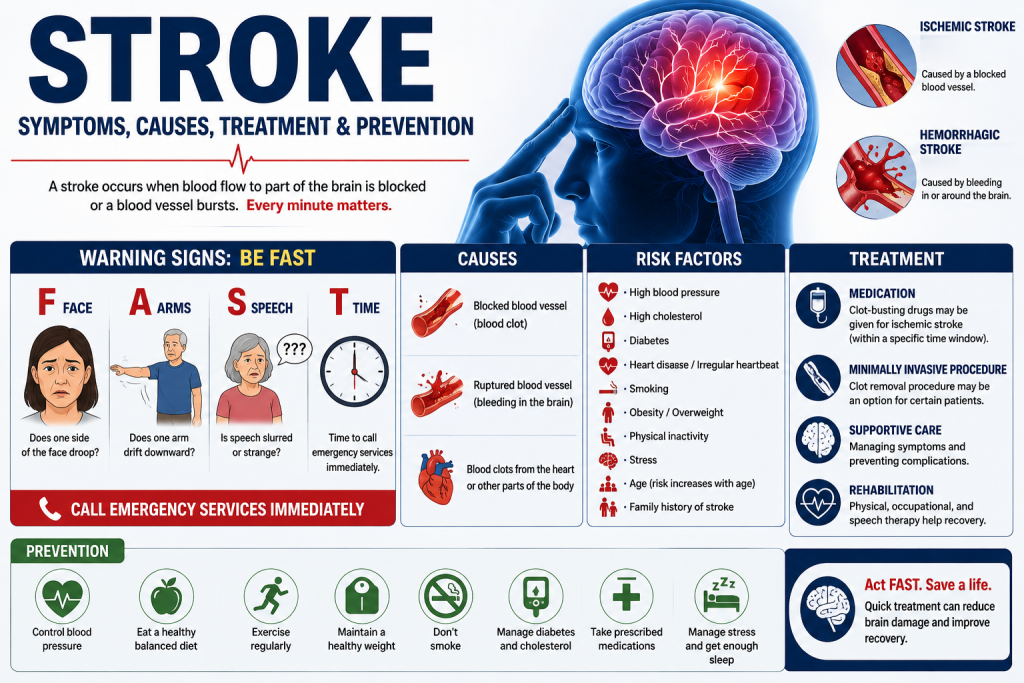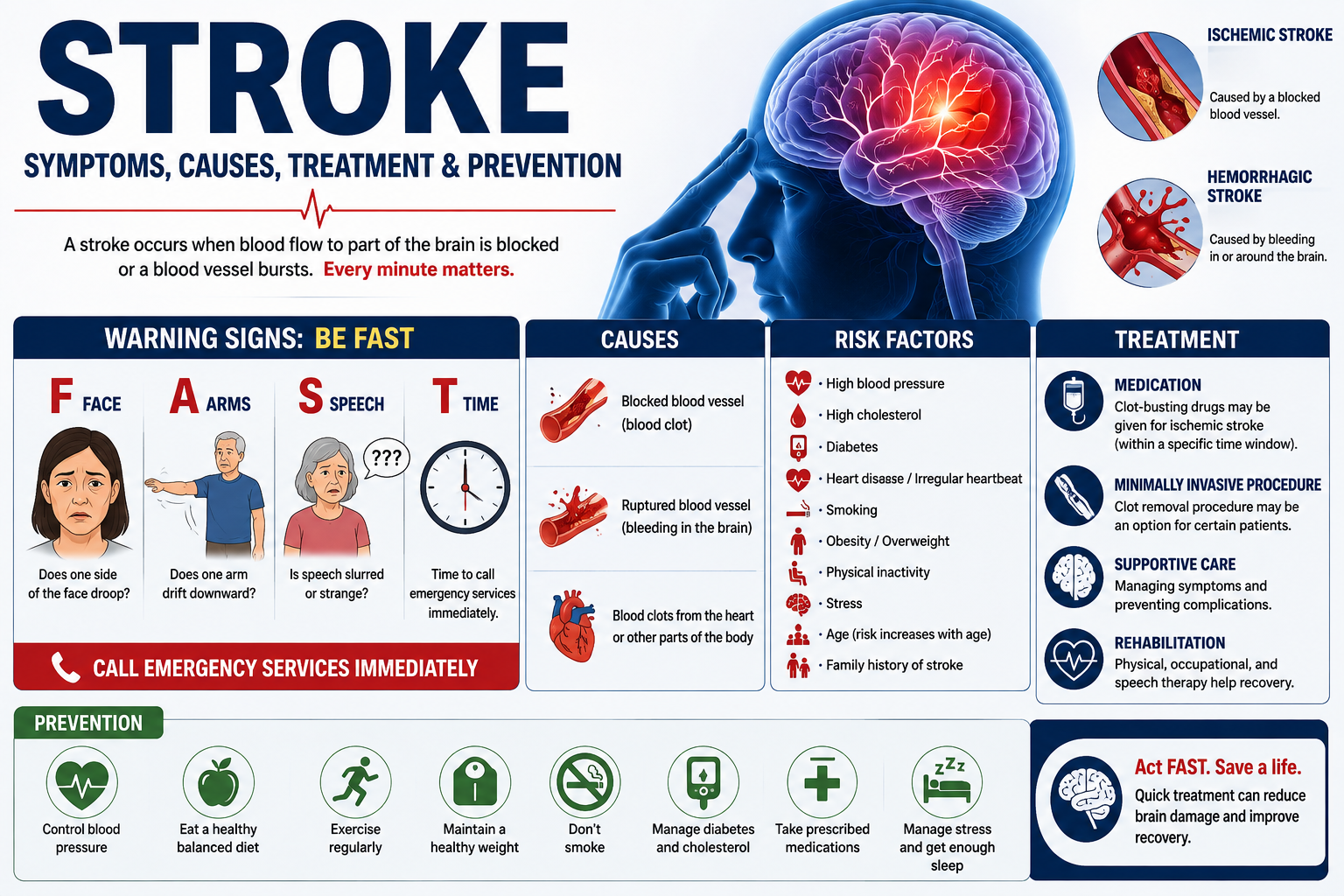

A stroke is a serious medical emergency that happens when blood flow to part of the brain is interrupted or when a blood vessel in the brain bursts. Because brain cells can become damaged when they do not receive enough oxygen and nutrients, getting medical treatment quickly is extremely important.
A stroke can happen suddenly, and the symptoms may vary from person to person. Some people experience weakness on one side of the body, difficulty speaking, facial drooping, vision problems, severe dizziness, or trouble walking.
Knowing the warning signs of a stroke can help you recognize an emergency and seek medical attention as quickly as possible.
This guide explains what a stroke is, the different types, common symptoms, causes, risk factors, treatment options, recovery, and ways to reduce your risk.
What Is a Stroke?
A stroke occurs when part of the brain does not receive the blood supply it needs or when bleeding occurs inside the brain.
The brain requires a continuous supply of oxygen and nutrients. When blood flow is blocked or a blood vessel ruptures, brain tissue can become injured.
There are two major types of stroke:
- Ischemic stroke
- Hemorrhagic stroke
There is also a condition called a transient ischemic attack (TIA), sometimes called a mini-stroke. A TIA can cause stroke-like symptoms that resolve, but it is still a medical emergency and can be an important warning that a major stroke may occur.
Is a Stroke an Emergency?
Yes.
A suspected stroke requires immediate medical attention. Do not wait to see whether symptoms disappear.
The faster a person receives appropriate treatment, the better the chances may be of limiting brain damage and improving recovery.
If you or someone near you develops sudden symptoms that could indicate a stroke, contact your local emergency medical service immediately.
What Are the Warning Signs of a Stroke?
Stroke symptoms often begin suddenly.
Common warning signs include:
- Sudden weakness or numbness of the face, arm, or leg
- Weakness or numbness, particularly on one side of the body
- Sudden difficulty speaking
- Trouble understanding speech
- Sudden confusion
- Sudden vision problems
- Sudden dizziness
- Difficulty walking
- Loss of balance or coordination
- A sudden, severe headache with no known cause
One useful way to remember common warning signs is FAST.
F — Face
Ask the person to smile.
Does one side of the face droop or feel numb?
A — Arms
Ask the person to raise both arms.
Does one arm drift downward or feel weak?
S — Speech
Ask the person to repeat a simple sentence.
Is their speech unclear, strange, or difficult to understand?
T — Time
If you notice any of these signs, time matters. Seek emergency medical help immediately.
Do not drive the person yourself if emergency medical transportation is available.
Stroke Symptoms in Women
Stroke symptoms can be similar in men and women, but women may also experience symptoms that are less commonly recognized.
These can include:
- Sudden weakness
- Confusion
- Difficulty speaking
- Vision changes
- Severe headache
- Dizziness
- Nausea or vomiting
- Loss of consciousness
Because symptoms can vary, sudden neurological changes should always be taken seriously.
Stroke Symptoms in Older Adults
Older adults may have the same common stroke symptoms as younger people.
However, symptoms can sometimes be mistaken for other problems, particularly when there are multiple health conditions.
Sudden changes in:
- Speech
- Walking
- Balance
- Vision
- Strength
- Alertness
- Behavior
should be evaluated urgently.
What Causes a Stroke?
The causes of stroke depend on the type.
Ischemic Stroke
An ischemic stroke occurs when a blood vessel supplying the brain becomes blocked.
The blockage may happen because of:
- A blood clot
- A buildup of fatty deposits in an artery
- A clot that travels from another part of the body
- Narrowing of blood vessels
Ischemic strokes are the most common type of stroke.
Hemorrhagic Stroke
A hemorrhagic stroke happens when a blood vessel in or around the brain ruptures and causes bleeding.
Possible causes include:
- High blood pressure
- A weakened blood vessel
- Certain blood vessel abnormalities
- Some medications or bleeding disorders
- Other conditions that increase the risk of bleeding
The treatment for hemorrhagic stroke is different from treatment for ischemic stroke, which is why rapid medical evaluation is essential.
What Is a TIA?
A transient ischemic attack, or TIA, happens when blood flow to part of the brain is temporarily interrupted.
The symptoms may resemble those of a stroke but usually resolve.
Even when symptoms disappear, a TIA should not be ignored.
A TIA can be a warning sign that a future stroke may occur. Anyone experiencing possible TIA symptoms should receive urgent medical evaluation.
Major Stroke Risk Factors
Some risk factors can increase the likelihood of having a stroke.
Important risk factors include:
High Blood Pressure
High blood pressure is one of the major risk factors for stroke.
Over time, uncontrolled high blood pressure can damage blood vessels and increase the risk of both blocked and bleeding blood vessels in the brain.
High Cholesterol
High levels of certain types of cholesterol can contribute to plaque buildup inside arteries.
Narrowed arteries can increase the risk of blood-flow problems.
Diabetes
Diabetes can affect blood vessels and increase cardiovascular risk.
Keeping blood glucose under appropriate control can be an important part of reducing long-term complications.
Smoking
Smoking damages blood vessels and can increase the risk of stroke and other cardiovascular diseases.
Stopping smoking is one of the important steps people can take to improve cardiovascular health.
Heart Conditions
Certain heart conditions can increase stroke risk.
For example, atrial fibrillation, an irregular heart rhythm, can increase the chance of blood clots forming in the heart and traveling to the brain.
Obesity and Physical Inactivity
Being physically inactive and having excess body weight can contribute to several stroke risk factors, including high blood pressure, diabetes, and abnormal cholesterol levels.
Age
Stroke risk generally increases with age, although a stroke can happen at any age.
Family History
A family history of stroke or cardiovascular disease may contribute to an individual's risk.
Can Stress Cause a Stroke?
Stress is a normal part of life, but chronic stress can affect behaviors and health factors associated with cardiovascular disease.
For example, ongoing stress may contribute to:
- Poor sleep
- Physical inactivity
- Unhealthy eating
- Smoking
- Increased alcohol consumption
- Difficulty managing blood pressure
Stress alone should not be considered the sole cause of a stroke, but managing overall cardiovascular risk is important.
How Is a Stroke Diagnosed?
When someone arrives at a hospital with possible stroke symptoms, healthcare professionals quickly assess the person's condition.
Evaluation may include:
- Medical history
- Physical and neurological examination
- Blood tests
- Brain imaging
- Blood vessel imaging
- Heart testing
A CT scan or MRI may be used to determine what is happening in the brain.
Doctors need to determine whether the stroke is caused by a blocked blood vessel or bleeding because treatment can be very different.
Stroke Treatment
Stroke treatment depends on the type of stroke, the location of the problem, the severity of symptoms, and how long ago symptoms started.
Treatment for Ischemic Stroke
For certain eligible patients, doctors may use medication to dissolve a blood clot.
In some situations, a procedure called mechanical thrombectomy may be used to physically remove a clot from a large blood vessel.
Not every patient is eligible for every treatment. Doctors make decisions based on medical history, imaging results, timing, and other factors.
Treatment for Hemorrhagic Stroke
Treatment for a hemorrhagic stroke focuses on controlling bleeding, reducing pressure when necessary, and treating the underlying cause.
Some patients may need procedures or surgery.
Why Time Matters
Brain tissue can become damaged when blood flow is interrupted.
This is why medical professionals emphasize rapid evaluation and treatment when stroke symptoms appear.
Do not wait for symptoms to improve on their own.
Stroke Recovery
Stroke recovery varies greatly.
Some people recover quickly, while others may need months or years of rehabilitation.
Recovery depends on factors such as:
- Location of the brain injury
- Size of the affected area
- Type of stroke
- Speed of treatment
- Overall health
- Age
- Complications
- Access to rehabilitation
Stroke Rehabilitation
Rehabilitation can help people regain skills affected by a stroke.
Depending on the person's needs, rehabilitation may include:
Physical Therapy
Physical therapy can help improve:
- Strength
- Balance
- Walking
- Coordination
- Movement
Occupational Therapy
Occupational therapy can help people relearn everyday activities such as dressing, eating, bathing, and safely moving around the home.
Speech and Language Therapy
A stroke can affect speech, language, swallowing, or communication.
Speech-language professionals can help patients work on these difficulties.
Cognitive Rehabilitation
Some people experience problems with:
- Memory
- Attention
- Problem-solving
- Concentration
- Planning
Cognitive rehabilitation may help with these challenges.
Can You Prevent a Stroke?
Not every stroke can be prevented, but many risk factors can be managed.
Some important prevention strategies include:
Control Blood Pressure
Regularly monitoring blood pressure and following a healthcare professional's treatment plan can reduce cardiovascular risk.
Don’t Smoke
If you smoke, quitting can significantly benefit your cardiovascular health.
Eat a Heart-Healthy Diet
A balanced eating pattern can include:
- Vegetables
- Fruits
- Whole grains
- Beans
- Nuts
- Lean protein
- Fish
- Healthy sources of unsaturated fats
Limiting excessive sodium, highly processed foods, and foods high in unhealthy fats can also support cardiovascular health.
Exercise Regularly
Regular physical activity can help improve cardiovascular health, blood pressure, cholesterol, and blood sugar.
If you have a medical condition or have not exercised for a long time, ask your healthcare professional what type and amount of activity is appropriate for you.
Maintain a Healthy Weight
A healthy weight can reduce the risk of several conditions associated with stroke.
Focus on sustainable habits rather than extreme diets or rapid weight-loss methods.
Manage Diabetes
If you have diabetes, follow your healthcare professional's recommendations for monitoring and managing blood glucose.
Manage Cholesterol
Regular cholesterol checks can help identify cardiovascular risk.
If treatment is recommended, take medications as prescribed and maintain healthy lifestyle habits.
Treat Heart Conditions
If you have a heart condition such as atrial fibrillation, follow your healthcare professional's treatment plan.
Some people with certain heart conditions may be prescribed medication to reduce the risk of blood clots.
Stroke and Blood Tests
Blood tests can be part of the evaluation of someone with suspected stroke.
Depending on the situation, doctors may use blood tests to check information such as:
- Blood glucose
- Blood counts
- Blood clotting
- Electrolytes
- Kidney function
- Other relevant health markers
Blood tests alone cannot determine every type of stroke. Brain imaging and other examinations are often necessary.
What Happens After a Stroke?
After emergency treatment, the medical team evaluates the person's condition and begins planning recovery.
Depending on the severity of the stroke, a person may experience:
- Weakness
- Paralysis
- Speech difficulties
- Swallowing problems
- Vision changes
- Memory problems
- Emotional changes
- Balance problems
- Difficulty performing everyday activities
Recovery is different for every person.
Support from healthcare professionals, family members, and caregivers can be an important part of the process.
Emotional Changes After a Stroke
A stroke can affect more than physical movement.
Some people experience changes in:
- Mood
- Anxiety
- Motivation
- Sleep
- Emotional control
- Confidence
These changes can be challenging for both patients and families.
If emotional or behavioral changes continue, discuss them with the healthcare team. Support and treatment may be available.
When Should You Seek Emergency Help?
Seek emergency medical help immediately if you or someone else develops sudden:
- Facial drooping
- Arm or leg weakness
- Numbness
- Difficulty speaking
- Confusion
- Vision loss
- Severe dizziness
- Loss of balance
- Severe unexplained headache
Do not wait to see whether the symptoms disappear.
Even if the symptoms improve, they may represent a TIA and still require urgent medical evaluation.
Frequently Asked Questions About Stroke
What is the first sign of a stroke?
A sudden change in facial movement, arm or leg strength, speech, vision, balance, or coordination can be an early sign of stroke. Symptoms can vary, so sudden neurological changes should be treated as an emergency.
Can a stroke happen suddenly?
Yes. Stroke symptoms often begin suddenly, although some people may notice symptoms that develop over a short period.
Can a healthy person have a stroke?
Yes. A person who appears healthy can still experience a stroke. However, managing risk factors such as blood pressure, smoking, cholesterol, diabetes, and heart disease can reduce risk.
Can you recover completely from a stroke?
Some people recover very well, while others have lasting effects. Recovery depends on many factors, including the type and severity of the stroke and how quickly treatment begins.
Is a TIA a stroke?
A TIA produces stroke-like symptoms because blood flow to the brain is temporarily interrupted. Although symptoms resolve, a TIA is an important warning sign and requires urgent medical evaluation.
What is the best way to prevent a stroke?
Managing blood pressure is especially important. Other helpful steps include not smoking, staying physically active, maintaining a healthy weight, eating a balanced diet, managing diabetes and cholesterol, and treating relevant heart conditions.
Final Thoughts
A stroke is a medical emergency that can affect movement, speech, memory, vision, balance, and many other functions. Recognizing the warning signs and seeking emergency medical care quickly can make a major difference.
The most important symptoms to remember are sudden facial drooping, arm or leg weakness, speech difficulty, confusion, vision changes, dizziness, and problems with balance or coordination.
Stroke prevention also matters. Managing blood pressure, avoiding tobacco, staying active, eating a balanced diet, maintaining a healthy weight, managing diabetes and cholesterol, and treating certain heart conditions can help reduce the risk.
If you believe you or someone else may be having a stroke, seek emergency medical care immediately rather than waiting for symptoms to disappear.
Medical Disclaimer: This article is provided for general educational purposes and is not a substitute for professional medical advice, diagnosis, or treatment. If you experience possible stroke symptoms, seek emergency medical care immediately.