
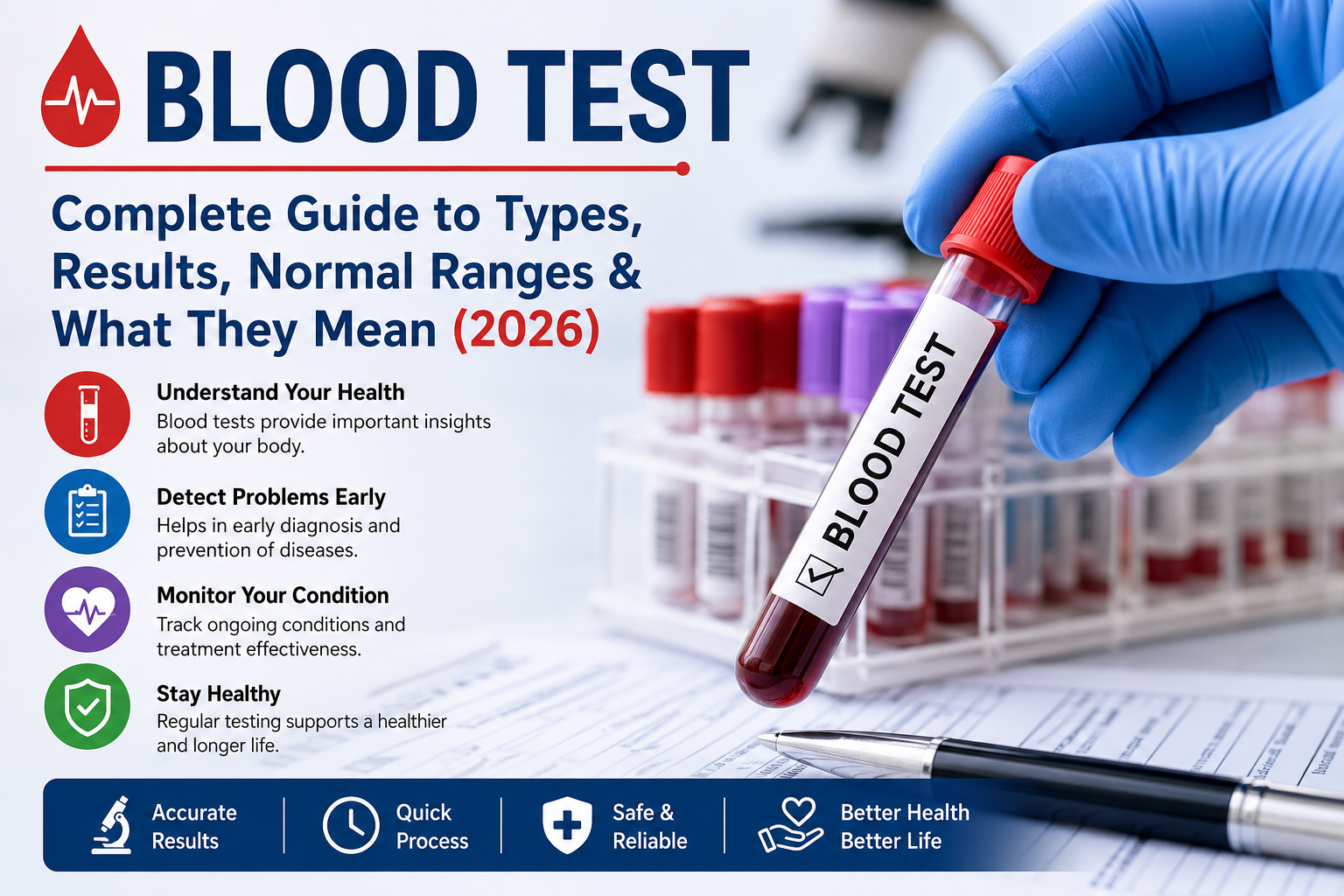

A blood test is one of the most common medical tests used to check a person's overall health and look for signs of disease or other health problems. A small sample of blood can provide doctors with important information about blood cells, organs, hormones, cholesterol, blood sugar, nutrients, and many other aspects of health.
Blood tests are used during routine checkups as well as when someone has symptoms that need further investigation. Your doctor may recommend a blood test to monitor an existing condition, check whether a treatment is working, or help identify a possible health problem.
Understanding what a blood test involves can make the process less stressful. This guide explains the most common types of blood tests, how to prepare, what your results may mean, and when you should discuss your results with a healthcare professional.
What Is a Blood Test?
A blood test involves taking a small sample of blood and sending it to a laboratory for analysis. The sample is usually collected from a vein in your arm, although some tests can use blood from a fingertip.
The laboratory analyzes the blood for specific substances or characteristics depending on what your healthcare provider wants to evaluate.
https://www.hopkinsmedicine.org/health/treatment-tests-and-therapies/blood-test
For example, a blood test may measure:
- Red and white blood cells
- Hemoglobin
- Blood glucose
- Cholesterol
- Triglycerides
- Liver enzymes
- Kidney function markers
- Electrolytes
- Hormones
- Vitamins and minerals
- Inflammation-related markers
- Certain antibodies
The specific tests you need depend on your age, health history, symptoms, medications, and medical concerns.
Why Do Doctors Order Blood Tests?
There are many reasons a healthcare professional may recommend a blood test.
1. Routine Health Screening
Blood tests may be included in a routine physical examination. They can help identify potential health issues before noticeable symptoms develop.
Depending on your individual situation, routine testing may evaluate things such as blood sugar, cholesterol, blood counts, kidney function, or liver function.
2. Investigating Symptoms
Doctors may order blood tests when you have unexplained symptoms such as:
- Persistent tiredness
- Weakness
- Unexplained weight changes
- Frequent infections
- Excessive thirst
- Changes in urination
- Abdominal discomfort
- Dizziness
- Unusual bruising
- Changes in appetite
A blood test is only one part of a medical evaluation. Doctors usually consider your symptoms, medical history, physical examination, and other tests when determining a diagnosis.
3. Monitoring a Medical Condition
People with certain chronic health conditions may need regular blood tests.
Testing can help healthcare professionals monitor changes over time and determine whether treatment is working or needs adjustment.
4. Monitoring Medications
Some medications require periodic blood testing because they can affect organs, blood cells, electrolytes, or other measurable substances.
Your healthcare provider will tell you if a medication requires regular laboratory monitoring.
Common Types of Blood Tests
There are many different blood tests. The following are some of the most commonly used.
Complete Blood Count (CBC)
A complete blood count, commonly called a CBC, measures several components of your blood.
It may include measurements of:
- Red blood cells
- White blood cells
- Hemoglobin
- Hematocrit
- Platelets
- Mean cell volume and other red-cell measurements
A CBC can provide information that may help doctors investigate problems such as anemia, infection, inflammation, or certain blood disorders.
However, an abnormal CBC result does not automatically mean that you have a particular disease. Additional evaluation may be necessary.
Blood Glucose Test
A blood glucose test measures the amount of glucose, or sugar, in your blood.
Blood glucose testing can be used to screen for or monitor diabetes and other problems involving blood sugar regulation.
Common glucose-related tests include:
- Fasting blood glucose
- Random blood glucose
- Oral glucose tolerance testing
- Hemoglobin A1C
The appropriate test depends on the reason for testing and your medical situation.
Hemoglobin A1C Test
The A1C test provides an estimate of your average blood glucose levels over approximately the previous two to three months.
Unlike a single blood glucose measurement, A1C provides a longer-term picture of blood sugar control.
Doctors commonly use A1C testing to help diagnose diabetes and prediabetes and to monitor people who already have diabetes.
Cholesterol and Lipid Tests
A lipid panel, sometimes called a cholesterol test, measures fats in your blood.
It commonly includes:
- Total cholesterol
- LDL cholesterol
- HDL cholesterol
- Triglycerides
These measurements can help healthcare professionals evaluate cardiovascular risk together with other factors such as blood pressure, smoking status, age, family history, and existing health conditions.
Liver Function Tests
Liver blood tests measure substances associated with liver function or liver-cell injury.
Depending on the panel, testing may include:
- ALT
- AST
- Alkaline phosphatase
- Bilirubin
- Albumin
- Total protein
Abnormal liver-related results can have many possible causes. Your doctor may recommend additional testing depending on the pattern and severity of the results.
Kidney Function Blood Tests
Blood testing can help evaluate kidney function.
Common measurements include:
- Creatinine
- Blood urea nitrogen (BUN)
- Estimated glomerular filtration rate (eGFR)
- Electrolytes
Kidney results are interpreted together with other information, including age, medical history, medications, hydration status, urine tests, and previous results.
Thyroid Blood Tests
Thyroid testing can help evaluate how the thyroid gland is functioning.
A common starting test is TSH, or thyroid-stimulating hormone. Depending on the situation, doctors may also order thyroid hormone measurements such as free T4.
Thyroid testing may be considered when someone has symptoms that could be associated with thyroid problems, such as unexplained changes in weight, fatigue, temperature sensitivity, or changes in heart rate.
Vitamin and Nutrient Blood Tests
Some blood tests measure levels of vitamins, minerals, or other nutrients.
Depending on symptoms and risk factors, healthcare professionals may evaluate nutrients such as:
- Vitamin B12
- Folate
- Vitamin D
- Iron-related markers
Testing should generally be based on medical need rather than taking large amounts of supplements without professional guidance.
Blood Test for Inflammation
Some blood tests can provide information about inflammation in the body.
Examples include:
- C-reactive protein (CRP)
- Erythrocyte sedimentation rate (ESR)
These tests can indicate that inflammation may be present, but they generally do not identify the exact cause by themselves.
Blood Test for Infection
Blood testing can sometimes help doctors investigate infections.
Depending on the suspected infection, testing may look for changes in blood cells, antibodies, antigens, genetic material, or other markers.
The appropriate test depends on the suspected organism and the timing of the illness.
How to Prepare for a Blood Test
Preparation depends on the specific test.
Some blood tests require no special preparation, while others may require fasting or other instructions.
Before your appointment, ask your healthcare provider or laboratory:
- Do I need to fast?
- Can I drink water?
- Should I take my usual medications?
- Should I avoid exercise beforehand?
- Is there anything I should avoid eating or drinking?
If fasting is required, follow the instructions you receive rather than making assumptions.
Do not stop prescription medication unless your healthcare professional specifically tells you to do so.
Can You Drink Water Before a Blood Test?
For many fasting blood tests, plain water is generally allowed and can be helpful because dehydration may make blood collection more difficult.
However, instructions can vary depending on the test. Follow the specific instructions provided by your healthcare professional or laboratory.
If you are unsure, ask before your appointment.
What Happens During a Blood Test?
A blood test is usually a quick procedure.
A healthcare professional will generally:
- Ask you to sit or lie down.
- Identify an appropriate vein, usually in your arm.
- Clean the skin.
- Place a band around your upper arm.
- Insert a small needle into the vein.
- Collect blood into one or more tubes.
- Remove the needle.
- Apply pressure and a small bandage.
The procedure usually takes only a few minutes.
You may feel a brief pinch when the needle enters the skin. Some people experience temporary bruising or mild soreness afterward.
Does a Blood Test Hurt?
Most people experience only minor discomfort.
The sensation can vary depending on the person, the location of the vein, and the technique used to collect the sample.
If you are nervous about needles, tell the healthcare professional before the procedure. They can help you remain comfortable and may recommend positioning that reduces the risk of feeling faint.
How Long Does It Take to Get Blood Test Results?
The time required depends on the type of test and the laboratory.
Some routine tests may be available relatively quickly, while specialized tests can take longer.
Your healthcare provider or laboratory can usually tell you when you should expect the results.
Understanding Blood Test Results
Blood test reports often include:
- Your test result
- A measurement unit
- A reference range
- Sometimes a flag indicating that the result is outside the laboratory's reference range
It is important to understand that a result outside a reference range does not automatically mean that something is seriously wrong.
Reference ranges vary between laboratories and may depend on factors such as age, sex, testing method, and other characteristics.
Your doctor should interpret the results in the context of your overall health.
What Are Normal Blood Test Results?
There is no single "normal blood test" range that applies to everyone.
Different tests have different reference ranges, and laboratories may use different methods.
For this reason, it is usually better to look at the reference range printed directly on your laboratory report rather than comparing your result with a number found online.
Your healthcare provider can explain what your specific results mean.
What Does a High Blood Test Result Mean?
A high result can have many possible explanations.
Depending on the test, it could be related to:
- A temporary change
- Medication
- Diet
- Dehydration
- Exercise
- Infection
- Inflammation
- An underlying medical condition
One abnormal result usually cannot establish a diagnosis by itself.
Your doctor may repeat the test or order additional testing if necessary.
What Does a Low Blood Test Result Mean?
Similarly, a low result can have many causes.
For example, some low results may be associated with nutritional deficiencies, medications, chronic conditions, blood disorders, or other health issues.
The meaning depends heavily on which test is abnormal and what other results show.
Can Blood Tests Detect Everything?
No.
Blood tests are useful, but they cannot detect every disease or health condition.
Some conditions require:
- Imaging tests
- Urine tests
- Stool tests
- Physical examinations
- Biopsies
- Genetic testing
- Heart tests
- Other specialized investigations
Doctors choose tests based on the patient's symptoms and medical history.
How Often Should You Get a Blood Test?
There is no universal schedule for everyone.
Some people may need blood testing as part of routine preventive care, while others may require more frequent testing because of medications or existing health conditions.
The right schedule depends on factors such as:
- Age
- Family history
- Medical history
- Current symptoms
- Medications
- Lifestyle
- Existing medical conditions
- Previous laboratory results
Ask your healthcare provider which tests are appropriate for you.
What Should You Do After Receiving Abnormal Results?
If your blood test shows an abnormal result, don't panic.
Instead:
- Review the report with your healthcare provider.
- Ask what the result means.
- Ask whether the result needs to be repeated.
- Discuss whether additional tests are necessary.
- Follow the treatment or monitoring plan recommended by your healthcare professional.
Avoid diagnosing yourself based solely on an online search or a single laboratory result.
Blood Test vs. Health Checkup
A blood test is not the same thing as a complete health checkup.
A health checkup may include:
- Medical history
- Blood pressure measurement
- Weight and other measurements
- Physical examination
- Blood tests
- Other screening tests when appropriate
Blood testing is therefore one component of preventive healthcare rather than a complete assessment by itself.
Tips for a Better Blood Test Experience
If you are preparing for a blood test, these simple steps may help:
Drink Water When Permitted
Adequate hydration can make blood collection easier. Follow your laboratory's instructions if you have been told to restrict fluids.
Follow Fasting Instructions
If your test requires fasting, follow the instructions carefully.
Tell the Provider About Medications
Let your healthcare professional know about prescription medications, over-the-counter medicines, and supplements.
Stay Relaxed
Try to breathe slowly and remain relaxed during the procedure.
Eat Afterwards If You Were Fasting
If you were instructed to fast, bring a snack for afterward if appropriate.
Frequently Asked Questions About Blood Tests
Is a blood test safe?
Blood tests are generally considered safe. Minor bruising, soreness, or brief bleeding can occur at the collection site.
Can I exercise before a blood test?
It depends on the test. Certain forms of strenuous exercise can temporarily affect some laboratory measurements. Follow the instructions provided for your specific test.
Can I take my medication before a blood test?
Do not change or stop medication unless your healthcare provider tells you to. Ask whether your medication should be taken before the test.
Why do I feel dizzy during a blood test?
Some people feel dizzy or faint during blood collection. Tell the healthcare professional if you have experienced this before so they can take appropriate precautions.
Should I worry about one abnormal result?
Not necessarily. An abnormal result can have many causes, and your healthcare provider will interpret it in context.
Final Thoughts
A blood test is a valuable tool for understanding many aspects of your health. From checking blood sugar and cholesterol to evaluating blood cells, kidney function, liver-related markers, and thyroid function, blood tests can provide important information for diagnosis, screening, and monitoring.
However, laboratory results should not be interpreted in isolation. A result outside the reference range does not necessarily mean that you have a disease, and a result within the range does not guarantee that everything is perfect.
If you receive blood test results that you do not understand, discuss them with a qualified healthcare professional. They can explain your results based on your symptoms, medical history, medications, and other relevant information.
Medical disclaimer: This article is for general educational purposes only and is not a substitute for professional medical advice, diagnosis, or treatment. If you have concerning symptoms or questions about your blood test results, speak with a qualified healthcare professional.
Related Keywords
blood test, blood test results, blood test normal range, types of blood tests, blood work, CBC blood test, blood glucose test, cholesterol blood test, liver blood test, kidney blood test, thyroid blood test, blood test preparation, fasting blood test, blood test results explained, routine blood test
One thought on “Blood Test: Complete Guide to Types, Results, Normal Ranges & What They Mean (2026)”