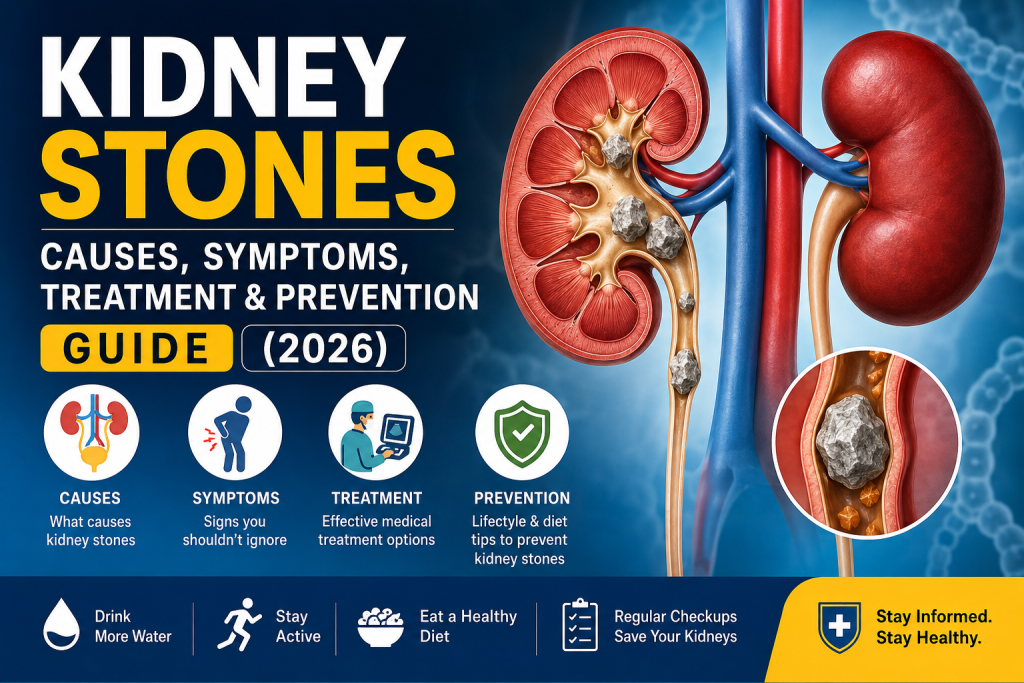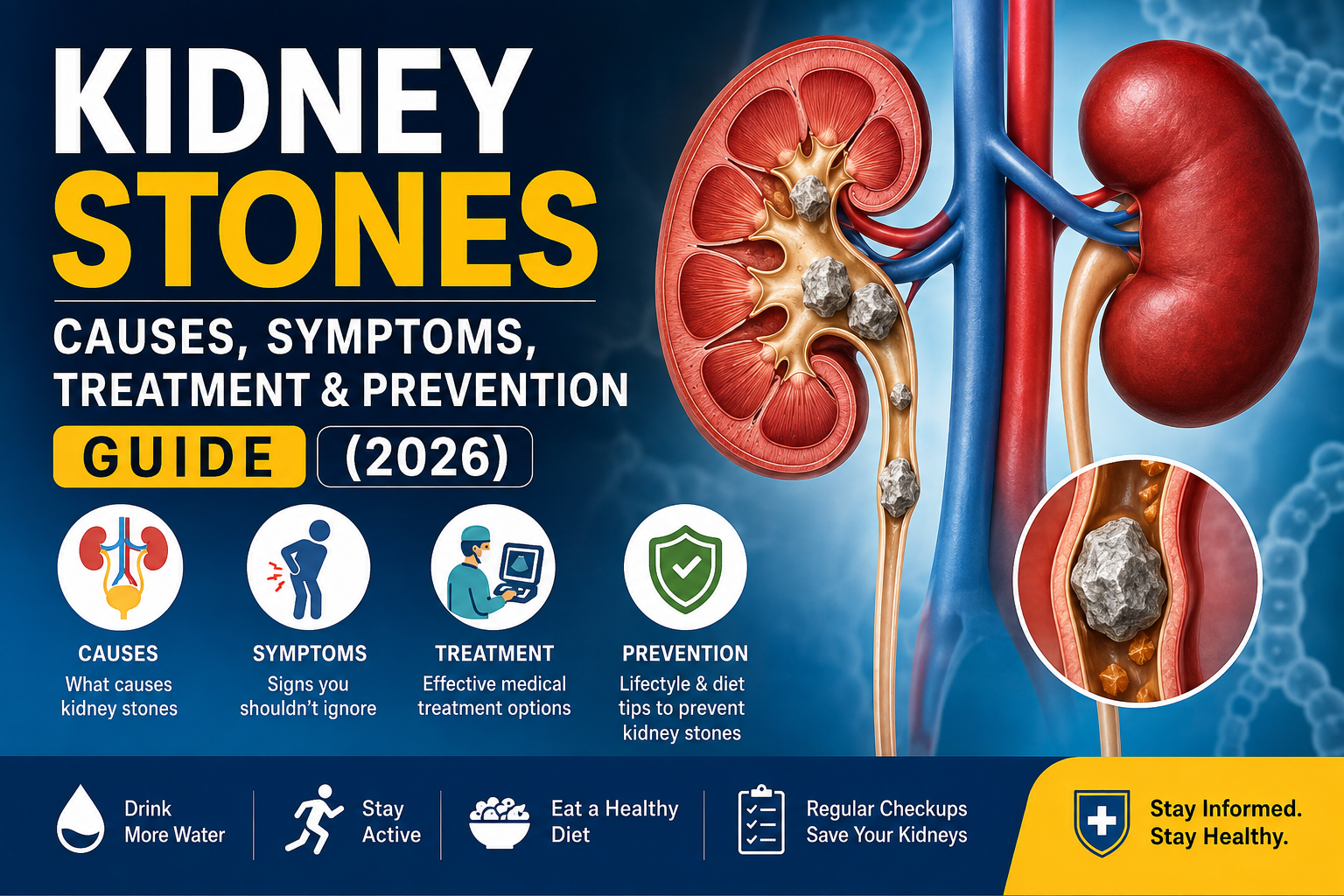

Kidney stones are hard, crystal-like deposits that form inside the kidneys. They can be very small, like grains of sand, or large enough to cause significant pain and block the flow of urine. Kidney stones are common, and many people experience them at least once in their lifetime.
The good news is that many small kidney stones can pass naturally with fluids and time. However, larger stones or stones that cause infection, severe blockage, or persistent pain may require medical treatment.
In this complete guide, we’ll explain what kidney stones are, common symptoms, causes and risk factors, treatment options, prevention strategies, and when you should seek medical care.
What Are Kidney Stones?
Kidney stones are solid masses made from minerals and salts that form in the urinary system. They usually begin when certain substances in urine become highly concentrated and form crystals. Over time, these crystals can grow into a stone.
A stone may remain inside the kidney without causing symptoms. Problems often begin when the stone moves into the ureter—the narrow tube connecting the kidney to the bladder.
When a stone blocks urine flow, it can cause sudden and intense pain.
Common Types of Kidney Stones
There are several types of kidney stones.
1. Calcium Stones
Calcium stones are the most common type. They are usually made from calcium oxalate, although calcium phosphate stones can also occur.
Factors that may increase the risk include dehydration, certain dietary patterns, and some medical conditions.
2. Uric Acid Stones
Uric acid stones can develop when urine contains too much uric acid and is too acidic. They may be more common in people with diets high in certain animal proteins or conditions associated with increased uric acid.
3. Struvite Stones
Struvite stones are associated with certain urinary tract infections. They can sometimes grow quickly and become relatively large.
4. Cystine Stones
Cystine stones are uncommon and occur because of an inherited condition called cystinuria, which causes excessive amounts of cystine to enter the urine.
Knowing the type of kidney stone can help healthcare professionals recommend appropriate prevention strategies.
Kidney Stones Symptoms
Small kidney stones may cause no symptoms at all. Symptoms often develop when a stone moves through the urinary tract.
Common symptoms include:
- Sharp pain in the side or back
- Pain that spreads toward the lower abdomen or groin
- Pain that comes and goes in waves
- Pain or burning while urinating
- Frequent urination
- Feeling an urgent need to urinate
- Blood in the urine
- Cloudy or foul-smelling urine
- Nausea or vomiting
The pain caused by a kidney stone can be extremely intense and may change location as the stone moves.
What Does Kidney Stone Pain Feel Like?
Kidney stone pain is often described as severe, sharp, or cramping. It may occur in the back or side below the ribs and can move toward the abdomen or groin.
Unlike some types of pain that remain constant, kidney stone pain may come in waves as the ureter contracts around the stone.
If you have sudden severe pain, especially with fever, chills, vomiting, or difficulty urinating, seek medical attention promptly.
What Causes Kidney Stones?
Kidney stones form when urine contains high levels of substances that can crystallize.
Common contributing factors include:
Dehydration
Not drinking enough water makes urine more concentrated. Concentrated urine can increase the chance of crystal formation.
Diet
Certain dietary patterns may increase kidney stone risk. Depending on the type of stone, high amounts of sodium, animal protein, or certain foods containing oxalate may contribute.
Family History
People with a family history of kidney stones may have a higher risk of developing them.
Previous Kidney Stones
Having had one kidney stone increases the possibility of developing another.
Certain Medical Conditions
Some metabolic and digestive conditions can increase kidney stone risk.
Certain Medications
Some medications can affect the substances present in urine and may increase the risk of particular types of stones.
Who Is at Higher Risk?
Several factors can increase the likelihood of kidney stones, including:
- Previous kidney stones
- Family history of kidney stones
- Drinking too little water
- High-sodium diets
- Certain high-animal-protein diets
- Obesity
- Some digestive diseases
- Certain metabolic disorders
- Recurrent urinary tract infections
- Certain medications
Having one or more risk factors does not necessarily mean you will develop kidney stones, but prevention becomes especially important if you have had them before.
How Are Kidney Stones Diagnosed?
Healthcare professionals may use several methods to diagnose kidney stones.
Medical History and Physical Examination
Your healthcare professional may ask about your symptoms, previous kidney stones, medications, diet, and family history.
Urine Tests
A urine test can help identify blood, infection, crystals, or other abnormalities.
Blood Tests
Blood tests may evaluate kidney function and levels of substances such as calcium and uric acid.
Imaging Tests
Imaging can help identify the location and size of a stone. Depending on the situation, healthcare professionals may use ultrasound, X-rays, or computed tomography (CT).
Stone Analysis
If you pass a kidney stone, your healthcare provider may recommend testing it. Identifying its composition can help determine how to reduce the risk of future stones.
Kidney Stone Treatment
Treatment depends on the stone's size, location, symptoms, and whether it is causing an obstruction or infection.
Drinking Fluids
For many small stones, drinking adequate fluids can help support urine flow and may help the stone pass.
However, people with severe blockage, significant vomiting, kidney problems, or certain medical conditions may need specific medical advice about fluid intake.
Pain Management
Healthcare professionals may recommend appropriate pain-relieving medicines to control symptoms while a stone passes.
Prescription Medication
In some cases, medications may help relax the ureter and improve the chance of passing certain stones.
Shock Wave Lithotripsy
Shock wave lithotripsy uses focused sound waves to break a kidney stone into smaller pieces that can pass through the urinary tract.
Ureteroscopy
During ureteroscopy, a healthcare professional passes a small instrument through the urinary tract to locate and remove or break up the stone.
Percutaneous Nephrolithotomy
Large or complicated kidney stones may sometimes require a procedure called percutaneous nephrolithotomy, which removes stones through a small opening in the back.
How Long Does It Take to Pass a Kidney Stone?
The time required to pass a kidney stone varies considerably.
Small stones are more likely to pass naturally than larger stones. Location also matters because a stone that has already reached the lower part of the ureter may be more likely to pass than one that remains higher up.
Your healthcare professional can provide a better estimate based on the stone's size and location.
Can You Prevent Kidney Stones?
In many cases, lifestyle changes can reduce the risk of future kidney stones.
Drink Enough Water
Staying adequately hydrated is one of the most important prevention strategies.
A useful approach is to drink water regularly throughout the day rather than waiting until you become very thirsty. People who sweat heavily, exercise frequently, or live in hot climates may need more fluids.
Your healthcare professional can recommend an appropriate fluid target based on your health and stone history.
Reduce Excess Sodium
A high-sodium diet can increase the amount of calcium released into urine in some people.
Try to limit foods that are particularly high in sodium, such as:
- Processed meats
- Packaged snacks
- Fast food
- Canned foods with added salt
- Instant meals
- Highly processed foods
Reading nutrition labels can make it easier to monitor sodium intake.
Eat a Balanced Diet
A balanced diet containing vegetables, fruits, whole grains, and appropriate amounts of protein can support overall health and may help reduce certain kidney stone risks.
Don’t Eliminate Calcium Without Medical Advice
It may seem logical to avoid calcium because many kidney stones contain calcium. However, dietary calcium can actually be part of a healthy kidney-stone-prevention diet for many people.
Do not dramatically reduce calcium intake unless your healthcare professional recommends it.
Limit Excess Animal Protein
Large amounts of animal protein may increase the risk of certain kidney stones in susceptible individuals.
If you have recurrent stones, ask a healthcare professional or registered dietitian whether changes to your protein intake would be appropriate.
Foods to Eat and Avoid With Kidney Stones
The ideal diet depends partly on the type of kidney stone.
Generally, a kidney-friendly eating pattern may emphasize:
- Water
- Fruits
- Vegetables
- Whole grains
- Appropriate dietary calcium
- Moderate protein
- Lower-sodium foods
Depending on your stone type, your healthcare professional may recommend limiting certain foods.
For example, people who form calcium oxalate stones may be advised to manage their intake of high-oxalate foods rather than simply avoiding all calcium.
Because prevention is individualized, stone analysis and medical evaluation can be especially helpful for people who repeatedly develop stones.
Kidney Stones and Water
Water plays an important role in kidney stone prevention because it helps dilute substances in urine that can form crystals.
One practical habit is to keep water available throughout the day and drink regularly.
Urine color can provide a general indication of hydration, but it is not a substitute for medical advice. People with kidney, heart, or other conditions that affect fluid intake should follow their healthcare professional's recommendations.
When Are Kidney Stones an Emergency?
Most kidney stones are not life-threatening, but certain symptoms require urgent medical attention.
Seek prompt medical care if you experience kidney stone symptoms along with:
- Fever or chills
- Severe or worsening pain
- Repeated vomiting
- Difficulty passing urine
- Very little urine
- Signs of infection
- Significant weakness or feeling seriously unwell
A blocked urinary tract combined with an infection can become a serious medical problem and requires urgent treatment.
Kidney Stones vs. Urinary Tract Infection
Kidney stones and urinary tract infections can cause some similar symptoms, including painful urination and frequent urination.
However, they are different conditions.
Kidney stones are solid mineral deposits, while urinary tract infections are caused by microorganisms, usually bacteria.
Some kidney stones, particularly struvite stones, are associated with urinary tract infections. Because the symptoms can overlap, medical evaluation may be necessary to determine the cause.
Frequently Asked Questions About Kidney Stones
Can kidney stones go away on their own?
Yes. Some small kidney stones can pass naturally without a procedure. Larger stones or stones causing complications may require treatment.
Is drinking water enough to remove kidney stones?
Water can support urine flow and may help small stones pass, but it is not guaranteed to dissolve or remove every stone.
What is the fastest way to get rid of a kidney stone?
The appropriate treatment depends on the stone's size, location, and your symptoms. Some stones pass naturally, while others require medication or procedures.
Can kidney stones come back?
Yes. People who have had kidney stones can develop them again. Identifying the cause and making appropriate dietary and lifestyle changes can help reduce recurrence.
Are kidney stones dangerous?
Many kidney stones pass without serious complications. However, a stone that causes significant obstruction or occurs with a urinary infection can be dangerous and requires prompt medical treatment.
Final Thoughts
Kidney stones are common urinary tract problems that can cause severe pain, especially when a stone moves through the ureter. Dehydration, dietary factors, family history, certain medical conditions, and previous stones can all contribute to risk.
Drinking adequate water, maintaining a balanced diet, reducing excessive sodium, and following personalized medical advice can help reduce the chance of future kidney stones.
If you experience severe pain, fever, chills, repeated vomiting, or difficulty urinating, don't ignore the symptoms. Contact a healthcare professional promptly.
Important: This article is for general educational purposes and is not a substitute for professional medical diagnosis or treatment. If you think you have a kidney stone, speak with a qualified healthcare professional for personalized advice
https://www.mayoclinic.org/diseases-conditions/kidney-stones/symptoms-causes/syc-20355755