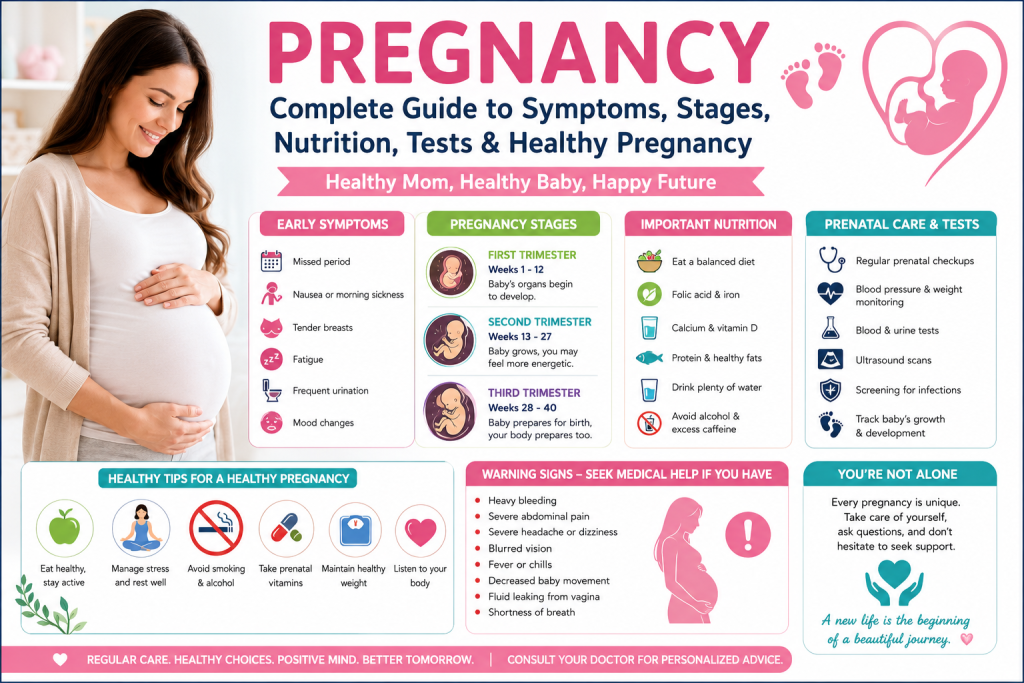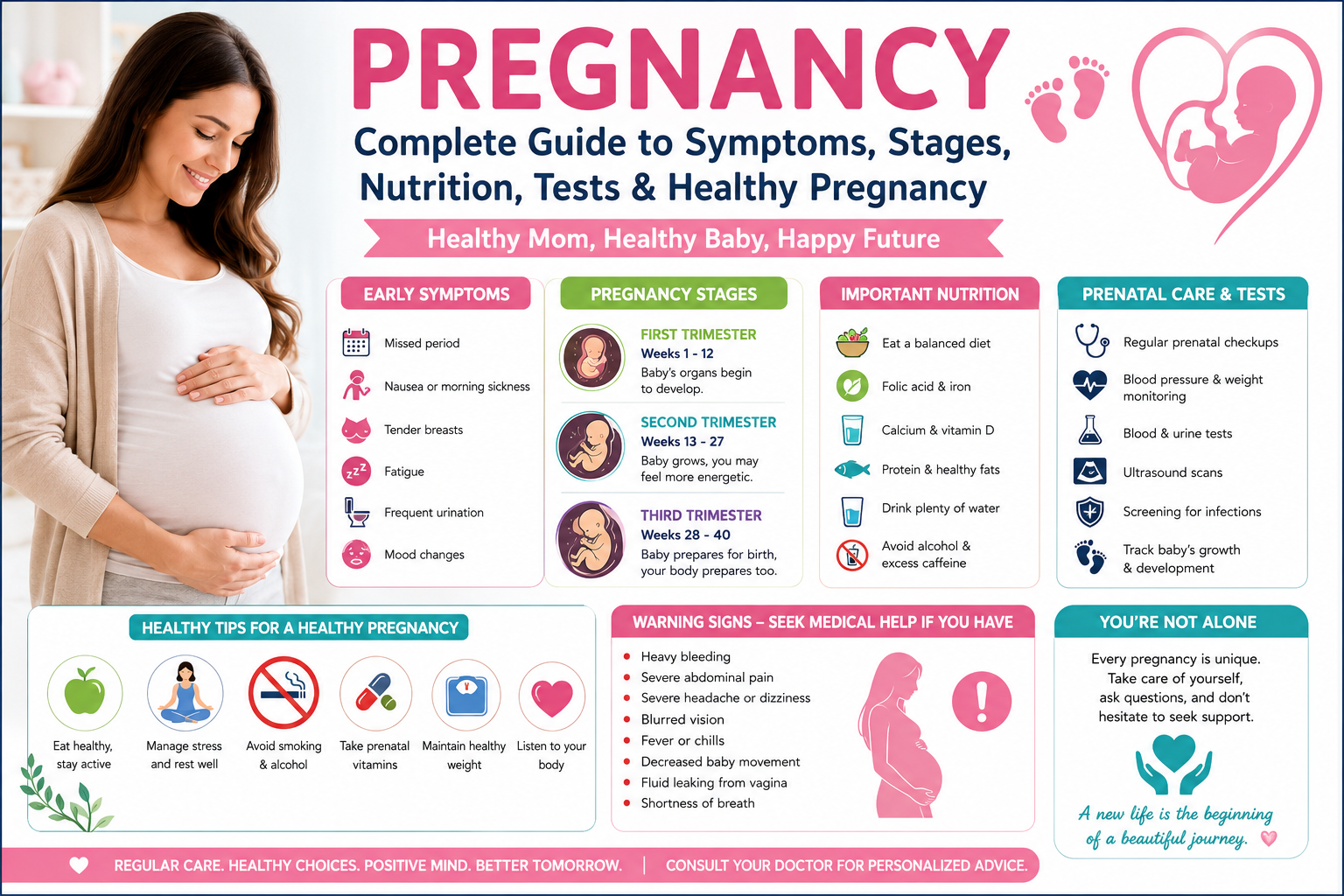

Pregnancy is an important period of physical and emotional change. From the first positive pregnancy test through labor and delivery, the body goes through many changes as the baby grows and develops.
Whether you are planning a pregnancy, recently discovered that you are pregnant, or are already several months along, understanding the basics can help you prepare for the months ahead.
This complete pregnancy guide explains common early symptoms, the three trimesters, prenatal care, nutrition, pregnancy tests, exercise, common discomforts, warning signs, and important questions to discuss with a healthcare professional.
Medical disclaimer: This article is for general educational purposes and does not replace personalized medical advice. Every pregnancy is different. If you have concerns about your pregnancy or symptoms, contact your doctor, midwife, or other qualified healthcare professional.
What Is Pregnancy?
Pregnancy begins when a fertilized egg implants in the uterus and continues as the embryo and fetus develop.
A typical pregnancy is often described as lasting about 40 weeks, counted from the first day of the last menstrual period. Healthcare professionals generally divide pregnancy into three stages called trimesters.
During pregnancy, major changes occur in the:
- Uterus
- Hormones
- Blood volume
- Heart and circulation
- Digestive system
- Breasts
- Immune system
- Muscles and joints
The developing baby also goes through rapid changes throughout pregnancy.
What Are the Early Signs of Pregnancy?
Pregnancy symptoms can vary considerably. Some people notice symptoms very early, while others have few symptoms at first.
Common early pregnancy symptoms can include:
- Missed menstrual period
- Nausea or vomiting
- Tender or swollen breasts
- Increased tiredness
- Frequent urination
- Changes in appetite
- Food cravings
- Food aversions
- Increased sensitivity to smells
- Mood changes
- Mild abdominal cramping
- Light spotting
These symptoms do not prove that someone is pregnant because many can also occur for other reasons.
A pregnancy test is the best way to check for pregnancy.
When Should You Take a Pregnancy Test?
Home pregnancy tests detect a hormone called human chorionic gonadotropin (hCG) in urine.
For many people, testing around the time of a missed period can provide a useful result. Testing too early can sometimes produce a negative result even when pregnancy is present.
If you receive a negative result but still believe you may be pregnant, follow the test instructions and consider repeating the test or speaking with a healthcare professional.
The Three Trimesters of Pregnancy
Pregnancy is commonly divided into three trimesters.
First Trimester
The first trimester covers approximately weeks 1 through 12.
During this period:
- Pregnancy hormones rise
- The placenta develops
- Major structures of the baby's body begin forming
- Morning sickness may occur
- Fatigue is common
- Breast changes may develop
The first trimester can be an exciting but sometimes uncomfortable period.
Second Trimester
The second trimester generally covers approximately weeks 13 through 27.
Many people find that some early symptoms improve during this stage.
You may notice:
- Increased energy
- A growing abdomen
- Continued breast changes
- Increased appetite
- Skin changes
- Back discomfort
- The baby's movements becoming noticeable
Prenatal appointments continue throughout this period, and healthcare professionals may recommend different tests depending on your individual pregnancy.
Third Trimester
The third trimester generally begins around week 28 and continues until birth.
As the baby grows, you may experience:
- Increased abdominal size
- Back discomfort
- Difficulty sleeping
- Frequent urination
- Heartburn
- Swelling
- Shortness of breath
- Braxton Hicks contractions
Your healthcare provider will continue monitoring your health and the baby's development and discuss preparation for labor and delivery.
Pregnancy Week by Week
Pregnancy development changes from week to week.
Weeks 1–4
The pregnancy begins around the time of conception, although pregnancy dating typically starts from the first day of the last menstrual period.
During the early weeks, implantation and early embryonic development take place.
Weeks 5–8
Early development progresses rapidly. The foundations of major organs and body structures begin developing.
Pregnancy symptoms such as nausea and fatigue may become more noticeable.
Weeks 9–12
The developing baby continues to grow, and many major structures are becoming more developed.
Some people begin feeling better toward the end of the first trimester, although symptoms can continue.
Weeks 13–20
The pregnancy enters the second trimester.
The abdomen becomes more noticeable, and some people begin feeling fetal movement during this general period.
Weeks 21–27
The baby continues growing and developing. Healthcare providers may monitor growth, maternal health, and other aspects of pregnancy.
Weeks 28–40
The baby continues gaining weight and developing in preparation for birth.
Prenatal visits become increasingly important as the pregnancy approaches delivery.
Why Is Prenatal Care Important?
Prenatal care involves regular healthcare appointments during pregnancy.
These visits allow healthcare professionals to monitor:
- Mother's health
- Baby's growth
- Blood pressure
- Weight
- Symptoms
- Laboratory results
- Possible pregnancy complications
Prenatal care also gives you an opportunity to ask questions about nutrition, exercise, medications, labor, delivery, and newborn care.
The timing and frequency of appointments can vary depending on your health and pregnancy.
Common Pregnancy Tests
Healthcare professionals may recommend different tests throughout pregnancy.
Depending on your circumstances, testing can include:
- Pregnancy confirmation
- Blood tests
- Urine tests
- Blood pressure checks
- Ultrasound examinations
- Genetic screening
- Diabetes screening
- Screening for certain infections
- Other tests based on medical history
Not every pregnant person needs every test. Your healthcare professional can explain which tests are appropriate for you.
Ultrasound During Pregnancy
An ultrasound uses sound waves to create images of the pregnancy.
Ultrasound may be used to evaluate:
- Pregnancy development
- Baby's growth
- Fetal anatomy
- Placental location
- Amniotic fluid
- Other aspects of pregnancy
The timing and number of ultrasounds vary depending on medical needs and local prenatal care practices.
Pregnancy Nutrition
Good nutrition is an important part of a healthy pregnancy.
A balanced pregnancy diet can include:
- Fruits
- Vegetables
- Whole grains
- Beans and legumes
- Eggs
- Lean meats
- Fish that are appropriate during pregnancy
- Dairy products or fortified alternatives
- Nuts and seeds
- Healthy fats
Pregnancy increases the need for certain nutrients, so prenatal vitamins are often recommended.
Your healthcare professional can recommend a prenatal vitamin appropriate for you.
Important Nutrients During Pregnancy
Several nutrients are especially important during pregnancy.
Folic Acid
Folic acid is important for early development of the baby's brain and spinal cord.
People planning pregnancy are commonly advised to take folic acid before conception and during early pregnancy.
The appropriate amount should be discussed with a healthcare professional, particularly if you have specific medical conditions or risk factors.
Iron
Iron helps make hemoglobin, which carries oxygen in the blood.
Pregnancy increases the body's need for iron, and healthcare professionals may monitor iron status through blood tests.
Calcium
Calcium is important for bones and teeth and supports normal muscle and nerve function.
Good food sources include dairy products, fortified foods, leafy greens, and certain other calcium-rich foods.
Vitamin D
Vitamin D supports bone health and other functions in the body.
Your healthcare professional can advise whether supplementation is appropriate.
Protein
Protein supports the growth and development of the baby and helps maintain the mother's tissues.
Protein can come from foods such as eggs, poultry, fish, beans, lentils, dairy products, nuts, and seeds.
Foods to Be Careful About During Pregnancy
Pregnancy can increase vulnerability to certain foodborne infections.
General food-safety precautions include:
- Avoiding raw or undercooked meat
- Avoiding raw or undercooked eggs when their safety is uncertain
- Avoiding unpasteurized milk and products made from it
- Washing fruits and vegetables thoroughly
- Keeping raw meat separate from ready-to-eat foods
- Cooking foods to safe temperatures
- Following local guidance about fish and seafood
Some fish contain higher levels of mercury, so pregnant people should follow current medical or food-safety guidance about which fish to eat and which to limit or avoid.
Caffeine During Pregnancy
Many healthcare organizations recommend limiting caffeine during pregnancy.
Caffeine can come from:
- Coffee
- Tea
- Energy drinks
- Cola
- Chocolate
- Some medications
Because caffeine recommendations can vary based on individual circumstances and guidelines, discuss your daily intake with your healthcare professional.
Alcohol and Pregnancy
There is no established safe amount of alcohol during pregnancy.
Alcohol exposure can affect fetal development, so avoiding alcohol during pregnancy is the safest approach.
If you are pregnant and have questions about alcohol exposure, discuss your situation confidentially with a healthcare professional.
Exercise During Pregnancy
For many healthy pregnancies, regular moderate physical activity can provide benefits.
Potential benefits include:
- Better cardiovascular fitness
- Improved mood
- Better sleep
- Reduced risk of excessive weight gain
- Improved muscle strength
- Preparation for the physical demands of pregnancy and parenting
However, not every type of exercise is appropriate for every pregnancy.
Talk with your healthcare professional before starting a new exercise program, especially if you have complications or medical conditions.
Common Pregnancy Discomforts
Pregnancy can cause many temporary physical changes.
Morning Sickness
Nausea and vomiting are common, particularly during early pregnancy.
Helpful strategies may include:
- Eating smaller meals
- Avoiding foods that trigger nausea
- Drinking fluids regularly
- Eating simple foods when needed
- Getting enough rest
Severe or persistent vomiting can cause dehydration and may require medical treatment.
Heartburn
Hormonal changes and pressure from the growing uterus can contribute to heartburn.
Eating smaller meals, avoiding foods that trigger symptoms, and remaining upright after eating may help.
Talk with your healthcare professional before taking medication for heartburn during pregnancy.
Back Pain
As the body changes, back discomfort can become common.
Maintaining good posture, using appropriate support, staying active when permitted, and using pregnancy-safe exercises may help.
Frequent Urination
As pregnancy progresses, pressure on the bladder can increase the need to urinate.
However, pain or burning during urination may indicate an infection and should be discussed with a healthcare professional.
Swelling
Mild swelling of the feet and ankles can occur during pregnancy.
Sudden or severe swelling, especially when accompanied by other symptoms, should be evaluated promptly.
Mental and Emotional Health During Pregnancy
Pregnancy can bring many emotions.
You may feel:
- Excited
- Nervous
- Overwhelmed
- Happy
- Tired
- Anxious
- Uncertain
Mood changes can occur during pregnancy, but persistent sadness, severe anxiety, loss of interest in normal activities, or thoughts of harming yourself or someone else require professional attention.
You do not have to manage serious emotional difficulties alone.
Talk with your healthcare professional if you are struggling emotionally during pregnancy.
Medicines During Pregnancy
Not all medications are safe during pregnancy.
This includes prescription medicines, over-the-counter medicines, herbal products, and supplements.
Before starting, stopping, or changing medication, ask your doctor, midwife, or pharmacist whether it is appropriate during pregnancy.
Do not stop an important prescription medication on your own without medical guidance.
Pregnancy and Sleep
Sleep can become more difficult as pregnancy progresses.
Helpful habits may include:
- Keeping a consistent sleep schedule
- Creating a comfortable sleeping environment
- Limiting caffeine
- Staying physically active when appropriate
- Using pillows for support
- Discussing persistent sleep problems with your healthcare professional
Your preferred sleeping position may need to change as pregnancy progresses. Ask your healthcare professional for personalized guidance.
Preparing for Labor and Delivery
As the due date approaches, preparation can make the transition easier.
You may want to discuss:
- Where you plan to give birth
- Who you want with you
- Pain-relief options
- Signs of labor
- When to contact your healthcare provider
- Transportation plans
- Newborn supplies
- Breastfeeding or feeding plans
- Postpartum support
A childbirth education class can also help you understand what to expect.
Signs of Labor
Signs that labor may be approaching can include:
- Regular contractions that become stronger and closer together
- Changes in vaginal discharge
- Loss of the mucus plug
- Rupture of the membranes, commonly called water breaking
- Pelvic pressure
- Lower back discomfort
The signs and timing of labor can vary.
Your healthcare provider should explain when you should contact them or go to your planned birth facility.
Pregnancy Warning Signs
Most pregnancy symptoms are not emergencies, but certain symptoms require prompt medical attention.
Contact a healthcare professional urgently if you experience symptoms such as:
- Heavy vaginal bleeding
- Severe abdominal pain
- Severe or persistent headache
- Vision changes
- Fainting
- Chest pain
- Difficulty breathing
- Severe swelling
- Fever
- Persistent vomiting with inability to keep fluids down
- Decreased or changed fetal movement later in pregnancy
- Fluid leaking from the vagina
- Signs of labor before your expected time
If symptoms are severe or you believe there is an immediate emergency, seek emergency medical care.
Healthy Pregnancy Checklist
A healthy pregnancy involves more than eating well.
Important habits include:
- Attend recommended prenatal appointments
- Take prenatal vitamins as advised
- Eat a balanced diet
- Drink enough fluids
- Avoid alcohol
- Avoid tobacco and nicotine
- Discuss medications with a healthcare professional
- Stay physically active when medically appropriate
- Get enough rest
- Follow food-safety precautions
- Monitor and manage existing health conditions
- Ask questions when something does not feel right
- Prepare for labor and postpartum care
Frequently Asked Questions About Pregnancy
What is the first sign of pregnancy?
A missed period is one of the most common early signs, but pregnancy symptoms vary. A pregnancy test can help confirm whether pregnancy is present.
How long does pregnancy last?
Pregnancy is commonly dated as approximately 40 weeks from the first day of the last menstrual period. The actual timing of conception and birth can vary.
When should I start prenatal care?
It is generally best to contact a healthcare professional as soon as you know or suspect that you are pregnant so that appropriate prenatal care can be arranged.
What should I eat during pregnancy?
Focus on a balanced diet containing vegetables, fruits, whole grains, protein-rich foods, and appropriate sources of healthy fats and key nutrients.
Can I exercise while pregnant?
Many people with uncomplicated pregnancies can remain physically active, but the appropriate activities and intensity depend on individual circumstances. Ask your healthcare professional for personalized advice.
Are pregnancy symptoms the same for everyone?
No. Some people experience many symptoms, while others experience very few. Symptoms can also change throughout pregnancy.
When should I call my doctor during pregnancy?
Contact your healthcare professional if you experience unusual, severe, or concerning symptoms. Emergency symptoms such as severe bleeding, severe pain, difficulty breathing, or other signs of a serious problem require immediate Online doctor consultation services/ attention.
Final Thoughts
Pregnancy is a unique experience that brings significant physical, emotional, and lifestyle changes. Understanding the stages of pregnancy, eating a balanced diet, following food-safety recommendations, staying active when appropriate, and attending prenatal appointments can help support maternal and fetal health.
Remember that every pregnancy is different. Advice that is appropriate for one person may not be appropriate for another, particularly when medical conditions or pregnancy complications are involved.
If you are pregnant or planning to become pregnant, establish care with a qualified healthcare professional and discuss your individual needs. Regular prenatal care provides an opportunity to monitor your health, track the baby's development, identify potential problems, and prepare for labor and life after birth.
Medical Disclaimer: This article is intended for general education and should not be used as a substitute for medical diagnosis, treatment, or individualized advice. Always consult a qualified healthcare professional about your pregnancy, medications, symptoms, diet, and exercise.