
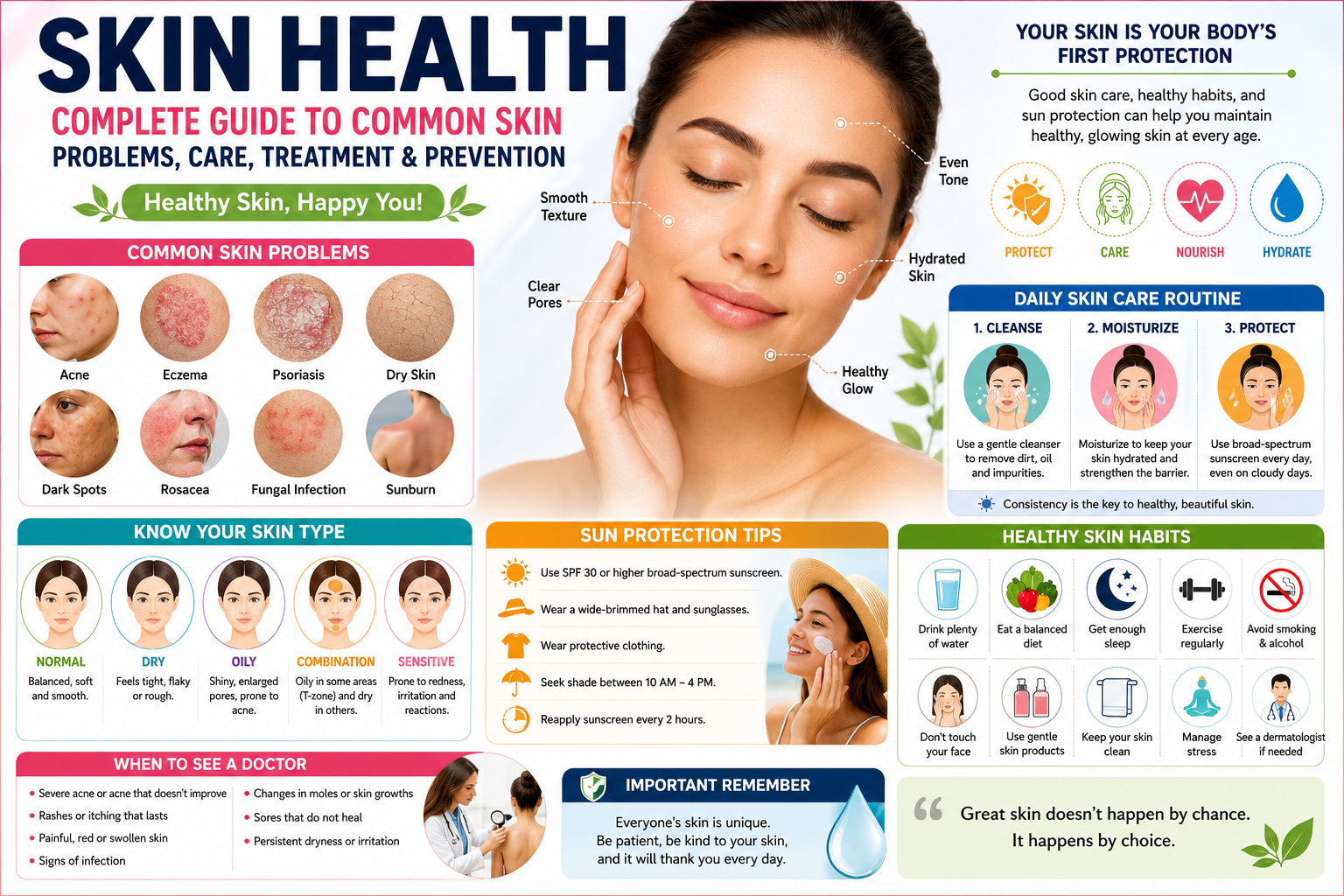

Your skin is the body's largest organ and plays an important role in protecting you from the outside environment. It helps regulate body temperature, prevents excessive water loss, allows you to feel touch and pain, and provides a protective barrier against many environmental factors.
Healthy skin does not have to look perfect. Skin naturally changes with age, weather, hormones, lifestyle, and other factors. Dryness, acne, dark spots, irritation, wrinkles, and other changes are common.
Understanding your skin type and learning basic skin-care habits can help you maintain healthier skin and recognize when a skin problem may require professional attention.
This complete guide explains skin structure, common skin problems, daily skin care, skin types, sun protection, nutrition, aging, treatment options, and when to see a dermatologist.
Medical disclaimer: This article is for general educational purposes and is not a substitute for professional medical advice, diagnosis, or treatment. Persistent, painful, rapidly changing, or concerning skin problems should be evaluated by a qualified healthcare professional.
What Is Skin?
Skin is a complex organ made up of several layers and specialized structures.
The major layers include:
- Epidermis: The outermost layer that provides much of the skin's protective barrier.
- Dermis: The deeper layer containing blood vessels, nerves, hair follicles, sweat glands, and connective tissue.
- Subcutaneous tissue: The layer beneath the skin that contains fat and connective tissue.
Together, these structures help protect the body and perform important functions.
Why Is Skin Health Important?
Healthy skin supports the body's protective barrier and helps maintain normal hydration and temperature.
Good skin care can also help:
- Reduce dryness and irritation
- Protect against sun damage
- Manage acne
- Support the skin barrier
- Reduce the chance of certain infections
- Improve comfort
- Maintain a healthy appearance
Skin care is not only about appearance. It is also part of general health.
What Are the Different Skin Types?
People commonly describe skin as:
- Normal
- Dry
- Oily
- Combination
- Sensitive
Your skin can also change over time.
For example, someone who normally has oily skin may experience dryness during cold weather or after using certain skin-care products.
Normal Skin
Normal skin is generally balanced and may have relatively few problems with excessive oiliness or dryness.
However, normal skin still benefits from basic cleansing, moisturizing, and sun protection.
Dry Skin
Dry skin may feel:
- Tight
- Rough
- Flaky
- Itchy
- Sensitive
Dryness can become worse in cold weather, dry environments, hot showers, or after using harsh cleansers.
Oily Skin
Oily skin produces more sebum, an oily substance made by the sebaceous glands.
Excess oil can contribute to:
- Enlarged-looking pores
- Acne
- Blackheads
- Shiny skin
Combination Skin
Combination skin may be oily in some areas and dry or normal in others.
The forehead, nose, and chin may produce more oil while the cheeks are comparatively dry.
Sensitive Skin
Sensitive skin may react easily to certain products, fragrances, weather conditions, or other environmental factors.
People with sensitive skin often benefit from simple products with fewer potential irritants.
Common Skin Problems
Skin conditions can range from mild temporary irritation to chronic medical disorders.
Some common skin problems include:
- Acne
- Eczema
- Psoriasis
- Dry skin
- Contact dermatitis
- Rosacea
- Fungal infections
- Hives
- Warts
- Skin pigmentation changes
- Sunburn
- Skin infections
The appearance of one condition can sometimes resemble another, so professional evaluation may be necessary when the diagnosis is uncertain.
Acne
Acne is one of the most common skin conditions.
It occurs when hair follicles become blocked with oil and dead skin cells. Inflammation and bacteria can also contribute.
Acne can appear as:
- Blackheads
- Whiteheads
- Pimples
- Pustules
- Nodules
- Cysts
Acne commonly affects the face, chest, shoulders, and back.
What Causes Acne?
Factors that can contribute to acne include:
- Hormonal changes
- Increased oil production
- Blocked pores
- Certain medications
- Genetics
- Skin-care products that clog pores
Acne is not simply caused by poor hygiene.
Basic Acne Care
Helpful habits may include:
- Washing gently
- Avoiding aggressive scrubbing
- Choosing non-comedogenic products
- Avoiding frequent touching of the face
- Not squeezing or picking pimples
- Using appropriate acne treatments
Moderate or severe acne may require treatment from a healthcare professional.
Eczema
Eczema refers to a group of conditions that can cause dry, itchy, inflamed skin.
Symptoms can include:
- Dryness
- Redness
- Itching
- Scaling
- Cracking
- Skin irritation
Eczema can affect children and adults.
Moisturizers, avoiding triggers, and appropriate medical treatments can help manage symptoms.
Psoriasis
Psoriasis is a chronic inflammatory skin condition that can cause raised, scaly patches.
Common areas include:
- Elbows
- Knees
- Scalp
- Lower back
- Other areas of the body
Psoriasis is not contagious.
Treatment depends on the type and severity and may include topical medicines, light therapy, or systemic treatments prescribed by a healthcare professional.
Dry Skin
Dry skin can occur at any age.
Common causes include:
- Cold weather
- Low humidity
- Hot showers
- Harsh soaps
- Frequent bathing
- Certain medications
- Some medical conditions
How to Help Dry Skin
Try to:
- Use a gentle cleanser
- Take shorter, lukewarm showers
- Apply moisturizer regularly
- Avoid excessive scrubbing
- Protect your skin from cold, dry air
- Use fragrance-free products if irritation is a concern
Applying moisturizer soon after bathing can help retain moisture.
Sun Protection and Skin Health
Sun exposure is one of the most important environmental factors affecting skin.
Excessive ultraviolet radiation can contribute to:
- Sunburn
- Premature skin aging
- Wrinkles
- Uneven pigmentation
- Skin damage
- Skin cancer
Protecting your skin from excessive UV exposure is an important part of long-term skin health.
How to Protect Your Skin From the Sun
Helpful strategies include:
- Seeking shade when the sun is strongest
- Wearing protective clothing
- Wearing a wide-brimmed hat
- Wearing sunglasses that provide UV protection
- Applying broad-spectrum sunscreen
- Reapplying sunscreen as directed, especially after swimming or sweating
Sunscreen should be used as part of a broader sun-protection strategy rather than as a reason to spend unlimited time in direct sunlight.
What Is SPF?
SPF, or Sun Protection Factor, is a measure related to protection against UVB radiation.
A broad-spectrum sunscreen helps protect against both UVA and UVB radiation.
Choose sunscreen according to your needs and follow the product instructions for application and reapplication.
Daily Skin-Care Routine
A complicated routine is not necessary for everyone.
A simple routine can include three basic steps:
Step 1: Cleanse
Use a gentle cleanser appropriate for your skin type.
Avoid excessive washing or aggressive scrubbing because these can irritate the skin barrier.
Step 2: Moisturize
Moisturizer helps support the skin barrier and reduce water loss.
Choose a product based on your skin type.
People with oily skin may prefer lightweight lotions or gels, while people with dry skin may prefer richer creams.
Step 3: Protect
During the day, use appropriate sun protection.
This simple routine can be more sustainable than using many products at once.
Should You Wash Your Face Every Day?
For most people, gentle daily cleansing is reasonable.
However, washing too frequently or using harsh products can irritate the skin.
If your skin becomes tight, burning, excessively dry, or irritated after cleansing, consider using a gentler cleanser and reducing unnecessary washing.
Is Exfoliation Good for Skin?
Exfoliation removes dead skin cells from the surface.
Some people find it helpful, but excessive exfoliation can damage the skin barrier and cause irritation.
If you exfoliate:
- Avoid aggressive scrubbing
- Do not exfoliate irritated or damaged skin
- Start gradually
- Stop if your skin becomes painful or inflamed
People with certain skin conditions should ask a healthcare professional before using strong exfoliating products.
Skin Care for Sensitive Skin
Sensitive skin may react to fragrances, preservatives, active ingredients, or environmental conditions.
If your skin is sensitive:
- Choose fragrance-free products
- Introduce one new product at a time
- Avoid unnecessary ingredients
- Patch-test new products when appropriate
- Stop using a product that causes significant irritation
If reactions continue, consult a dermatologist.
Skin and Nutrition
Your skin needs nutrients to maintain normal structure and function.
A balanced diet can provide important nutrients through foods such as:
- Fruits
- Vegetables
- Whole grains
- Beans
- Nuts
- Seeds
- Eggs
- Fish
- Lean proteins
- Dairy or fortified alternatives
No single food can guarantee perfect skin.
Instead, focus on an overall balanced eating pattern.
Water and Skin Health
Staying adequately hydrated supports normal body function.
However, drinking excessive amounts of water does not automatically cure dry skin or eliminate wrinkles.
If your skin is persistently dry, moisturizing and identifying environmental or medical causes may be more useful than simply increasing water intake.
Skin and Sleep
Sleep is important for overall health, and healthy habits can support the body's normal repair processes.
Poor sleep may also affect stress levels and behaviors that indirectly influence skin.
Try to maintain:
- A consistent sleep schedule
- A comfortable sleeping environment
- Regular physical activity
- Healthy eating habits
- A relaxing bedtime routine
Stress and Skin
Stress can affect some skin conditions.
People may notice changes in acne, eczema, psoriasis, or other skin problems during periods of significant stress.
Stress-management strategies can include:
- Exercise
- Relaxation techniques
- Adequate sleep
- Spending time with supportive people
- Breathing exercises
- Hobbies
- Professional counseling when needed
Managing stress does not replace medical treatment, but it can be part of a healthy lifestyle.
Skin Changes With Age
As people age, the skin naturally changes.
Common changes include:
- Thinner skin
- Increased dryness
- Fine lines
- Wrinkles
- Changes in pigmentation
- Reduced elasticity
- Slower wound healing
Sun protection throughout life is one of the most important habits for protecting long-term skin health.
Skin Care for Older Adults
Older skin may require extra attention because it can become thinner and drier.
Helpful habits include:
- Using gentle cleansers
- Moisturizing regularly
- Avoiding very hot water
- Protecting against excessive sun exposure
- Keeping the skin clean and dry
- Paying attention to wounds or sores that do not heal
Persistent or changing skin lesions should be evaluated by a healthcare professional.
What Is Skin Cancer?
Skin cancer occurs when abnormal skin cells grow uncontrollably.
Common types include:
- Basal cell carcinoma
- Squamous cell carcinoma
- Melanoma
Some skin cancers are highly treatable when detected early, making awareness of changing skin lesions important.
Skin Cancer Warning Signs
A changing mole or skin lesion should be evaluated, particularly when you notice:
- Changes in size
- Changes in shape
- Changes in color
- Irregular borders
- Persistent itching
- Bleeding
- Crusting
- A sore that does not heal
- A new unusual growth
The ABCDE approach is sometimes used when looking at moles:
- A — Asymmetry
- B — Border irregularity
- C — Color variation
- D — Diameter
- E — Evolving
This is not a diagnosis. If you notice a concerning or changing lesion, arrange an examination with a qualified healthcare professional.
Common Skin Treatments
Treatment depends on the specific skin condition.
Possible approaches include:
Moisturizers
Moisturizers are commonly used for dry skin and some forms of eczema.
Topical Medications
Creams, gels, lotions, or ointments may be prescribed for conditions such as acne, eczema, psoriasis, fungal infections, and other problems.
Oral Medications
Some conditions may require medication taken by mouth.
Phototherapy
Certain skin conditions can be treated with controlled medical light therapy.
Procedures
Dermatologists may use procedures such as:
- Cryotherapy
- Chemical peels
- Laser treatments
- Biopsy
- Removal of certain skin growths
The correct treatment depends on the diagnosis.
Why You Should Avoid Random Skin Treatments
Online skin-care advice can be useful for general education, but not every treatment is appropriate for every person.
Using strong products without guidance can cause:
- Burns
- Irritation
- Allergic reactions
- Skin barrier damage
- Increased sensitivity
- Pigmentation changes
If you have a persistent skin problem, getting an accurate diagnosis is usually more helpful than trying multiple treatments randomly.
When Should You See a Dermatologist?
Consider seeing a dermatologist or healthcare professional if you have:
- A rash that does not improve
- Severe or painful acne
- Persistent itching
- Recurrent skin infections
- A changing mole
- A sore that does not heal
- Unexplained hair or nail changes
- Severe dryness or cracking
- Skin symptoms that interfere with daily life
Seek urgent medical attention if you develop a severe allergic reaction, extensive blistering, rapidly spreading infection, or other serious symptoms.
How to Build a Simple Skin-Care Routine
You do not need dozens of products.
A practical routine may look like this:
Morning:
- Gentle cleanser if needed
- Moisturizer
- Broad-spectrum sunscreen
Evening:
- Gentle cleanser
- Appropriate treatment product if recommended
- Moisturizer
Introduce new products gradually so you can identify what works for your skin.
Skin-Care Mistakes to Avoid
Some common mistakes include:
Overwashing
Washing too often can remove natural oils and irritate the skin barrier.
Aggressive Scrubbing
Scrubbing harder does not necessarily produce healthier skin.
Using Too Many Products
Combining multiple active ingredients can increase irritation.
Picking Acne
Squeezing or picking pimples can increase inflammation and may contribute to scarring or discoloration.
Skipping Sunscreen
Daily sun protection can be an important part of preventing long-term UV damage.
Ignoring Persistent Changes
A skin problem that continues, worsens, or changes should not simply be ignored.
Frequently Asked Questions About Skin
How can I get healthier skin naturally?
Focus on basic habits such as gentle cleansing, moisturizing, sun protection, balanced nutrition, adequate sleep, physical activity, and avoiding tobacco.
What is the best skin-care routine?
For many people, a simple routine of cleansing, moisturizing, and sun protection is a good starting point. Specific treatments depend on your skin type and concerns.
How often should I moisturize?
Moisturize whenever your skin feels dry. Applying moisturizer after bathing can help reduce water loss.
Can diet improve skin?
A balanced diet supports overall health and provides nutrients needed for normal skin function. However, diet alone cannot treat every skin condition.
Can stress cause skin problems?
Stress can influence some skin conditions and may worsen symptoms in certain people. Managing stress can be useful as part of an overall approach to health.
When should I worry about a mole?
A mole that changes in size, shape, color, or appearance should be evaluated by a healthcare professional, particularly if it bleeds, crusts, or does not heal normally.
Simple Skin Health Checklist
- Cleanse gently
- Moisturize regularly
- Use sun protection
- Avoid smoking
- Eat a balanced diet
- Stay physically active
- Get adequate sleep
- Avoid unnecessary skin irritation
- Introduce new products gradually
- Do not pick or squeeze acne
- Monitor changing moles or lesions
- Seek professional advice for persistent skin problems
Final Thoughts
Healthy skin is about much more than appearance. Your skin protects your body, helps regulate temperature, allows you to feel your surroundings, and provides an important barrier against the environment.
A simple routine can go a long way: cleanse gently, moisturize when needed, protect your skin from excessive UV exposure, eat a balanced diet, get adequate sleep, and avoid habits that damage your health.
At the same time, remember that persistent acne, rashes, unusual growths, changing moles, unexplained discoloration, or wounds that do not heal may require professional evaluation.
There is no single skin-care routine that works for everyone. Your age, skin type, environment, medications, and medical history all matter. If you have an ongoing or concerning skin problem, a dermatologist or other qualified healthcare professional can help identify the cause and recommend an appropriate treatment plan.
Medical Disclaimer: This content is for educational purposes only and should not replace professional medical advice, diagnosis, or treatment. Do not start or stop a medical treatment based solely on information in this article.
https://my.clevelandclinic.org/health/diseases/21573-skin-diseases