
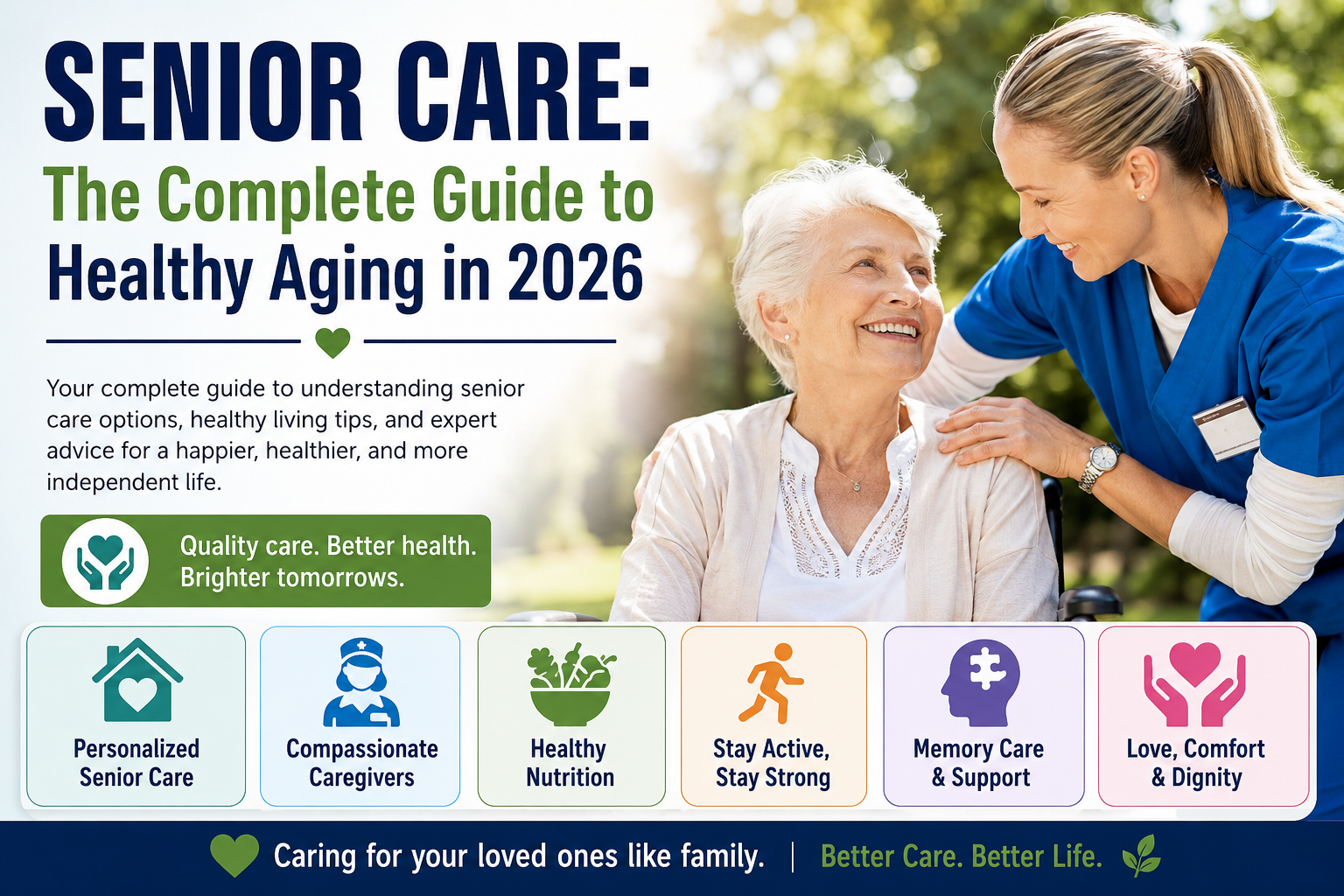

Growing older is a natural part of life, but aging well requires thoughtful planning, healthy habits, and access to quality senior care. As people live longer than ever before, families face important decisions about how to provide comfort, safety, and independence for their aging loved ones.
Whether you're caring for a parent, planning for your own future, or searching for professional senior care services, understanding today's options can make a significant difference. Modern senior care goes beyond meeting basic daily needs. It focuses on improving physical health, emotional well-being, social engagement, and overall quality of life.
In this complete guide, you'll discover everything you need to know about senior care in 2026, including available care options, health tips, financial planning, and practical advice for choosing the best care solution.
Table of Contents
- What Is Senior Care?
- Why Senior Care Matters
- Different Types of Senior Care
- Signs That a Loved One Needs Senior Care
- Benefits of Professional Senior Care
- How to Choose the Best Senior Care Provider
- Senior Nutrition and Healthy Aging
- Exercise for Seniors
- Memory Care and Dementia Support
- Technology Transforming Senior Care
- Frequently Asked Questions
- Final Thoughts
What Is Senior Care?
Senior care refers to a wide range of services designed to support older adults as they age. These services help seniors maintain their independence while receiving assistance with daily living, medical needs, emotional support, and social activities.
Senior care can be provided:
- At home
- In an Adult Family Home
- Assisted Living Communities
- Nursing Homes
- Independent Living Communities
- Memory Care Facilities
- Hospice Care Centers
The goal is always the same:
Helping older adults live healthier, happier, safer, and more fulfilling lives.
Why Senior Care Is More Important Than Ever
The world's aging population continues to grow rapidly. Advances in healthcare have increased life expectancy, allowing people to enjoy longer lives than previous generations.
However, aging often brings challenges such as:
- Reduced mobility
- Memory loss
- Chronic illnesses
- Arthritis
- Diabetes
- Heart disease
- Vision problems
- Hearing loss
- Loneliness
- Depression
Quality senior care addresses these challenges by offering personalized support while preserving dignity and independence.
Professional caregivers also reduce stress for family members who may struggle to balance work, children, and caregiving responsibilities.
Types of Senior Care Services
Understanding the different care options helps families make informed decisions.
1. In-Home Senior Care
Home care allows seniors to remain in familiar surroundings while receiving assistance with daily tasks.
Services often include:
- Meal preparation
- Medication reminders
- Bathing assistance
- Dressing
- Transportation
- Housekeeping
- Companionship
- Grocery shopping
This option is ideal for seniors who need some support but want to maintain their independence.
2. Adult Family Homes
Adult Family Homes provide personalized care in a small residential setting.
Unlike large nursing facilities, these homes typically care for only a few residents, creating a warm family atmosphere.
Benefits include:
- Personalized attention
- Comfortable environment
- Home-cooked meals
- 24-hour supervision
- Individual care plans
- Strong caregiver relationships
Adult Family Homes have become one of the fastest-growing senior care options because they combine professional support with a home-like environment.
3. Assisted Living Communities
Assisted living communities are designed for seniors who remain relatively independent but require assistance with daily living activities.
Residents enjoy:
- Private apartments
- Dining services
- Recreational activities
- Housekeeping
- Transportation
- Medication management
- Fitness programs
- Social events
These communities promote independence while ensuring help is available whenever needed.
4. Nursing Homes
Nursing homes provide comprehensive medical care for seniors with serious health conditions.
They offer:
- Skilled nursing care
- Rehabilitation services
- Physical therapy
- Occupational therapy
- Medical monitoring
- Specialized treatment
This option is generally appropriate for individuals requiring continuous medical supervision.
5. Memory Care
Memory care is specifically designed for individuals living with:
- Alzheimer's disease
- Dementia
- Cognitive impairment
Specialized caregivers create secure environments that reduce confusion while encouraging meaningful daily activities.
Memory care focuses on:
- Safety
- Routine
- Cognitive stimulation
- Emotional support
- Family communication
Signs Your Loved One May Need Senior Care
Many families struggle to determine the right time to seek professional assistance.
Watch for these warning signs:
Frequent Falls
Repeated falls may indicate declining balance or mobility.
Missed Medications
Missing medication schedules can quickly lead to serious health complications.
Poor Hygiene
Neglecting bathing, grooming, or wearing clean clothes often signals difficulty managing daily routines.
Weight Loss
Unexpected weight loss may indicate:
- Difficulty cooking
- Poor nutrition
- Forgetting meals
- Depression
- Medical conditions
Memory Problems
Examples include:
- Forgetting appointments
- Repeating questions
- Getting lost
- Confusion
- Difficulty managing finances
Social Isolation
Loneliness can increase the risk of:
- Depression
- Anxiety
- Heart disease
- Dementia
- Reduced physical health
Professional senior care encourages social interaction and emotional well-being.
Difficulty Managing Household Tasks
Signs include:
- Unpaid bills
- Dirty home
- Spoiled food
- Laundry piling up
- Clutter
These challenges often indicate that additional support is needed.
Benefits of Professional Senior Care
Choosing professional senior care offers many advantages beyond physical assistance.
Improved Safety
Caregivers help reduce accidents by assisting with:
- Walking
- Transfers
- Medication management
- Emergency response
This greatly lowers the risk of injuries.
Better Nutrition
Many seniors struggle to prepare healthy meals.
Professional caregivers ensure balanced nutrition through:
- Fresh meals
- Hydration reminders
- Dietary monitoring
- Special medical diets
Healthy eating supports:
- Stronger immunity
- Better energy
- Heart health
- Brain function
Emotional Support
Loneliness affects millions of older adults.
Caregivers provide companionship through:
- Conversations
- Games
- Walks
- Reading
- Music
- Shared activities
This emotional connection improves overall happiness and mental health.
Medication Management
Taking medications correctly is critical.
Professional caregivers assist by:
- Organizing prescriptions
- Providing reminders
- Monitoring side effects
- Coordinating with healthcare providers
Proper medication management helps prevent hospital visits and complications.
Personalized Care Plans
Every senior has unique needs.
Professional providers create individualized care plans based on:
- Medical history
- Physical abilities
- Personal preferences
- Lifestyle
- Family goals
This personalized approach ensures seniors receive appropriate support while maintaining independence whenever possible.
How to Choose the Best Senior Care Provider
Finding the right senior care provider is one of the most important decisions you can make for yourself or a loved one. Every senior has unique medical needs, personal preferences, and lifestyle goals, so taking time to evaluate different options is essential.
A high-quality senior care provider should offer more than just assistance with daily activities. They should create a safe, comfortable, and supportive environment where seniors can thrive physically, emotionally, and socially.
1. Assess Your Loved One’s Needs
Before comparing providers, make a list of your loved one's current and future care requirements.
Ask questions such as:
- Do they need help with bathing or dressing?
- Are they taking multiple medications?
- Do they have Alzheimer's disease or dementia?
- Can they walk safely without assistance?
- Do they need transportation?
- Are they socially isolated?
- Do they require skilled nursing care?
Understanding these needs will help narrow your options.
2. Check Licensing and Certifications
Always verify that the senior care provider is properly licensed according to state regulations.
Look for:
- State licensing
- Certified caregivers
- Background checks
- CPR certification
- First Aid certification
- Ongoing caregiver training
Professional qualifications demonstrate a commitment to high standards of care.
3. Visit the Facility
If you're considering an Adult Family Home or Assisted Living Community, schedule an in-person visit.
Pay attention to:
- Cleanliness
- Safety measures
- Friendly staff
- Happy residents
- Meal quality
- Bedrooms
- Bathrooms
- Outdoor areas
- Emergency systems
A welcoming environment often reflects the quality of care provided.
4. Ask About Staff Availability
Quality senior care depends on caregivers having enough time to provide personalized attention.
Ask:
- Is care available 24 hours a day?
- What is the caregiver-to-resident ratio?
- Is a registered nurse available?
- How are emergencies handled?
Lower caregiver workloads generally result in better care.
5. Review Services Offered
Every provider offers different services.
Common services include:
- Medication reminders
- Meal preparation
- Transportation
- Housekeeping
- Laundry
- Physical therapy
- Occupational therapy
- Memory care
- Hospice support
- Social activities
Choose a provider that matches both current and future needs.
6. Read Reviews
Online reviews often provide valuable insight.
Look for comments about:
- Compassion
- Professionalism
- Cleanliness
- Communication
- Staff responsiveness
- Overall satisfaction
Consistently positive reviews are usually a good sign.
Senior Nutrition for Healthy Aging
Good nutrition is the foundation of healthy aging.
As we grow older, our bodies require fewer calories but more vitamins, minerals, and protein. Eating a balanced diet can reduce the risk of chronic diseases while improving energy, mobility, and overall well-being.
Benefits include:
- Stronger bones
- Better memory
- Healthy weight
- Improved immune system
- Better heart health
- Increased energy
Best Foods for Seniors
Lean Protein
Protein helps maintain muscle strength.
Good choices include:
- Chicken
- Turkey
- Fish
- Eggs
- Beans
- Lentils
- Greek yogurt
Fruits
Colorful fruits provide antioxidants that protect cells from damage.
Excellent choices:
- Blueberries
- Apples
- Oranges
- Strawberries
- Bananas
- Grapes
Vegetables
Vegetables provide fiber, vitamins, and minerals.
Top choices:
- Broccoli
- Spinach
- Kale
- Carrots
- Bell peppers
- Sweet potatoes
Whole Grains
Whole grains support heart health and digestion.
Examples:
- Brown rice
- Oatmeal
- Whole wheat bread
- Quinoa
- Barley
Healthy Fats
Healthy fats protect the heart and brain.
Include:
- Avocados
- Olive oil
- Walnuts
- Almonds
- Chia seeds
- Salmon
Foods Seniors Should Limit
Reducing unhealthy foods helps prevent chronic diseases.
Limit:
- Sugary drinks
- Processed foods
- Fried foods
- Excess salt
- Candy
- White bread
- High-fat meats
Small dietary changes can lead to significant health improvements over time.
Importance of Hydration
Many seniors don't drink enough water because their sense of thirst decreases with age.
Dehydration can cause:
- Fatigue
- Confusion
- Dizziness
- Falls
- Kidney problems
Encourage:
- Water
- Herbal tea
- Milk
- Soup
- Water-rich fruits
Aim for consistent hydration throughout the day unless a healthcare provider recommends fluid restrictions.
Exercise for Healthy Aging
Physical activity is one of the best ways to maintain independence.
Regular exercise helps improve:
- Strength
- Flexibility
- Balance
- Heart health
- Mood
- Sleep quality
Even light daily activity provides significant health benefits.
Best Exercises for Seniors
Walking
Walking improves cardiovascular health while being gentle on the joints.
Benefits:
- Better circulation
- Weight management
- Improved mood
- Stronger muscles
Strength Training
Using light weights or resistance bands helps preserve muscle mass.
Benefits:
- Better balance
- Easier daily activities
- Reduced fall risk
- Stronger bones
Stretching
Stretching increases flexibility and reduces stiffness.
It also helps improve posture and mobility.
Chair Exercises
Ideal for seniors with limited mobility.
Chair exercises improve:
- Blood circulation
- Muscle strength
- Joint flexibility
Yoga
Gentle yoga promotes:
- Relaxation
- Balance
- Breathing
- Flexibility
- Stress reduction
Tai Chi
Tai Chi is widely recommended for older adults because it improves balance and coordination while reducing fall risk.
Mental Health Matters
Healthy aging involves emotional wellness as much as physical health.
Older adults may experience:
- Loneliness
- Anxiety
- Depression
- Grief
- Social isolation
Family support and professional senior care can make a meaningful difference.
Ways to Improve Emotional Well-Being
Encourage seniors to:
- Join community groups
- Attend religious services
- Read books
- Listen to music
- Garden
- Volunteer
- Spend time with grandchildren
- Learn new hobbies
- Stay connected through video calls
Purpose and connection are essential for a fulfilling life.
Preventing Falls
Falls are one of the leading causes of injury among older adults, but many are preventable.
Improve Home Safety
Simple changes include:
- Remove loose rugs
- Install grab bars in bathrooms
- Improve lighting
- Keep walkways clear
- Use non-slip mats
- Secure electrical cords
- Install handrails on stairs
Wear Proper Footwear
Choose shoes that provide:
- Good grip
- Low heels
- Proper support
- Non-slip soles
Avoid walking in socks on smooth floors.
Regular Vision and Hearing Checks
Poor vision or hearing can increase the risk of accidents.
Routine checkups help detect problems early and support safer mobility.
Review Medications
Some medications may cause:
- Dizziness
- Drowsiness
- Low blood pressure
Speak with a healthcare provider if side effects increase fall risk.
Creating a Personalized Senior Care Plan
Every individual has different needs, so a customized care plan is essential.
A comprehensive plan should include:
- Medical history
- Current medications
- Emergency contacts
- Dietary preferences
- Mobility needs
- Exercise routine
- Social activities
- Personal interests
- Religious or cultural preferences
- Short-term and long-term health goals
Review the plan regularly and update it as needs change.
Why Family Involvement Is Important
Even with professional caregivers, family members play a vital role.
Ways to stay involved include:
- Visiting regularly
- Attending care meetings
- Communicating with caregivers
- Monitoring health changes
- Celebrating birthdays and holidays
- Encouraging hobbies and social engagement
Strong family support contributes to better emotional health and a higher quality of life.