
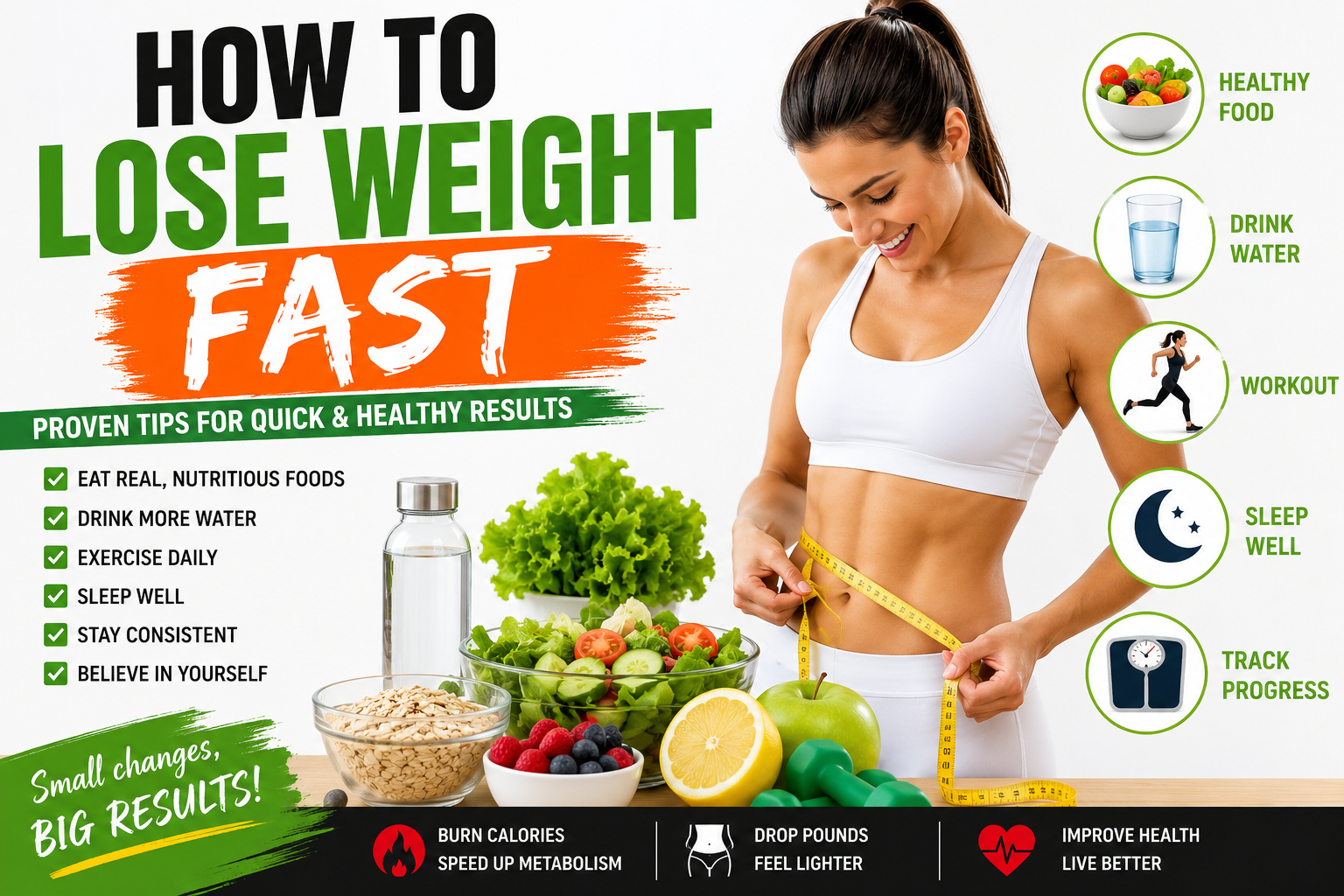

Losing weight is one of the most common health goals worldwide. Whether you want to improve your health, increase your energy, or feel more confident, learning how to lose weight fast safely is the first step toward lasting success.
Many people search for quick fixes or miracle diets, hoping for instant results. Unfortunately, these methods often lead to temporary weight loss followed by weight regain. The good news is that healthy, sustainable weight loss is possible with the right combination of nutrition, physical activity, and lifestyle habits.
In this guide, you'll discover practical, evidence-based strategies to help you lose weight, improve your overall health, and build habits that last well beyond 2026.
Table of Contents
- What Does It Mean to Lose Weight Fast?
- Why Healthy Weight Loss Matters
- Common Causes of Weight Gain
- The Science Behind Weight Loss
- Best Diets for Healthy Weight Loss
- Foods That Help Burn Fat
- Foods to Avoid
- Exercise Tips for Faster Results
- Lifestyle Habits That Support Weight Loss
- Common Mistakes to Avoid
- Frequently Asked Questions
- Final Thoughts
What Does “Lose Weight Fast” Really Mean?
When people search for how to lose weight fast, they often hope for dramatic results in a very short time. However, the healthiest and most sustainable approach is gradual fat loss rather than extreme dieting.
Healthy weight loss focuses on:
- Reducing body fat while preserving muscle
- Eating balanced, nutritious meals
- Staying physically active
- Building long-term habits instead of relying on fad diets
A realistic pace of weight loss helps reduce the risk of regaining the weight and supports overall well-being.
Why Healthy Weight Loss Matters
Maintaining a healthy weight is about more than appearance. It can lower the risk of many chronic conditions and improve quality of life.
Benefits of healthy weight loss include:
- Better heart health
- Improved blood sugar control
- Lower blood pressure
- Reduced joint pain
- Better sleep
- Increased energy
- Improved confidence
- Better mobility
- Lower risk of type 2 diabetes
- Enhanced mental well-being
Even modest weight loss can lead to meaningful health improvements.
Common Causes of Weight Gain
Weight gain often results from a combination of factors rather than a single cause.
Poor Eating Habits
Frequent consumption of highly processed foods, sugary drinks, oversized portions, and frequent snacking can increase calorie intake beyond your body's needs.
Lack of Physical Activity
A sedentary lifestyle means fewer calories are burned throughout the day. Sitting for long periods and avoiding regular exercise can contribute to gradual weight gain.
Poor Sleep
Sleep plays an important role in regulating hunger hormones. Not getting enough quality sleep may increase appetite and cravings for high-calorie foods.
Aim for 7–9 hours of sleep per night for most adults.
Stress
Chronic stress can affect eating habits and encourage emotional eating. Many people turn to high-sugar or high-fat foods during stressful periods.
Managing stress through healthy coping strategies can support weight-loss efforts.
Medical Conditions
Some medical conditions or medications can make weight management more challenging. If you're concerned about unexpected weight changes, consult a healthcare professional for personalized advice.
The Science Behind Weight Loss
Weight loss occurs when your body uses more energy than it receives from food and drinks over time. This encourages the body to draw on stored energy, including body fat.
Successful weight loss usually combines:
- Nutritious eating
- Regular physical activity
- Good sleep
- Stress management
- Consistency
Rather than chasing quick fixes, focus on habits you can maintain for the long term.
Best Diets for Healthy Weight Loss
There is no single diet that works for everyone. The best eating pattern is one you can follow consistently while meeting your nutritional needs.
Mediterranean Diet
The Mediterranean diet emphasizes:
- Vegetables
- Fruits
- Whole grains
- Beans
- Fish
- Olive oil
- Nuts
- Seeds
It has been associated with heart health and can support healthy weight management.
High-Protein Eating Plan
Protein can help you feel full and supports muscle maintenance during weight loss.
Good protein sources include:
- Chicken
- Turkey
- Fish
- Eggs
- Greek yogurt
- Cottage cheese
- Beans
- Lentils
- Tofu
Whole-Food Eating
Prioritize minimally processed foods such as:
- Fresh vegetables
- Fruits
- Whole grains
- Lean proteins
- Healthy fats
Limiting ultra-processed foods can make it easier to manage calorie intake while improving nutrition.
Best Foods for Weight Loss and how to lose weight fast
Leafy Green Vegetables
Vegetables such as spinach, kale, lettuce, and broccoli are high in nutrients and fiber while being relatively low in calories.
Lean Protein
Protein-rich foods help increase fullness and support muscle health.
Examples include:
- Chicken breast
- Turkey
- Fish
- Eggs
- Beans
- Lentils
Fresh Fruits
Fruits provide vitamins, minerals, water, and fiber.
Good choices include:
- Apples
- Oranges
- Berries
- Pears
- Grapefruit
Whole Grains
Whole grains provide fiber and sustained energy.
Examples:
- Oatmeal
- Brown rice
- Quinoa
- Whole wheat bread
Healthy Fats
Healthy fats can be part of a balanced diet when eaten in moderation.
Choose:
- Avocados
- Olive oil
- Almonds
- Walnuts
- Chia seeds
Foods to Limit
Limiting certain foods can help reduce excess calorie intake.
These include:
- Sugar-sweetened beverages
- Candy
- Pastries
- Fried foods
- Highly processed snacks
- Fast food
- Refined grains
- Excess alcohol
Enjoying these foods occasionally is often more sustainable than trying to eliminate them completely.
Stay Hydrated
Drinking enough water supports overall health and may help some people distinguish thirst from hunger.
Practical tips:
- Drink water throughout the day.
- Choose water instead of sugary drinks when possible.
- Include water-rich foods such as cucumbers, watermelon, and oranges.
Portion Control Tips and how to lose weight fast
You don't necessarily have to eliminate your favorite foods. Managing portion sizes can make a meaningful difference.
Helpful strategies:
- Use smaller plates.
- Eat slowly.
- Pay attention to hunger and fullness cues.
- Fill half your plate with vegetables.
- Avoid eating directly from large packages.
Build Healthy Habits
Successful weight loss is usually the result of consistent habits rather than perfection.
Start with small, achievable goals, such as:
- Walking daily
- Eating more vegetables
- Choosing water over sugary drinks
- Preparing meals at home more often
- Getting enough sleep
These habits can add up over time and support long-term success.
Best Exercises to Lose Weight Fast and how to lose weight fast
Exercise is one of the most effective ways to support healthy weight loss. It burns calories, strengthens muscles, improves heart health, and boosts your metabolism. The best results come from combining cardiovascular exercise with strength training.
1. Walking
Walking is one of the easiest and safest forms of exercise for beginners.
Benefits
- Burns calories
- Improves heart health
- Reduces stress
- Increases daily activity
- Requires no expensive equipment
Aim for 30–60 minutes of brisk walking on most days of the week.
2. Strength Training
Many people focus only on cardio, but strength training is equally important. Building muscle helps your body burn more calories throughout the day.
Examples include:
- Squats
- Push-ups
- Lunges
- Resistance bands
- Dumbbell exercises
- Bodyweight workouts
Try strength training 2–3 times per week.
3. High-Intensity Interval Training (HIIT)
HIIT alternates short bursts of intense exercise with brief recovery periods.
Benefits include:
- Efficient calorie burning
- Improved cardiovascular fitness
- Time-saving workouts
- Increased calorie burn after exercise
Beginners should start slowly and increase intensity over time.
4. Cycling
Cycling is gentle on the joints and can help improve endurance while burning calories. It can be done outdoors or on a stationary bike.
5. Swimming
Swimming provides a full-body workout while reducing stress on joints. It is especially helpful for older adults or people with joint pain.
Cardio vs. Strength Training
For the best weight-loss results, include both types of exercise in your routine.
Cardio
- Burns calories during exercise
- Improves heart and lung health
- Increases endurance
Examples:
- Walking
- Running
- Cycling
- Swimming
- Dancing
Strength Training
- Preserves muscle during weight loss
- Supports metabolism
- Improves posture and bone health
- Makes daily activities easier
A balanced program that includes both is often the most effective.
Sample Healthy Meal Plan for how to lose weight fast
Breakfast
- Oatmeal with blueberries
- One boiled egg
- Green tea or black coffee (unsweetened)
Morning Snack
- Apple
- Handful of almonds
Lunch
- Grilled chicken breast
- Brown rice
- Mixed vegetables
- Side salad
Afternoon Snack
- Greek yogurt
- Fresh berries
Dinner
- Baked salmon
- Steamed broccoli
- Sweet potato
Evening Snack (Optional)
- Cottage cheese
- Carrot sticks
- Herbal tea
Healthy Snacks
Instead of chips or candy, choose:
- Fresh fruit
- Mixed nuts (in moderation)
- Low-fat yogurt
- Hummus with vegetables
- Hard-boiled eggs
- Air-popped popcorn
- Cottage cheese
- Cucumber slices
Sleep and Weight Loss
Many people underestimate the importance of sleep.
Poor sleep may:
- Increase hunger
- Reduce energy for exercise
- Affect food choices
- Increase cravings for sugary foods
Better Sleep Tips
- Go to bed at the same time each night.
- Limit screen time before bed.
- Keep your bedroom cool and dark.
- Avoid large meals late at night.
- Limit caffeine in the afternoon and evening.
Stress Management
Stress can make healthy eating more difficult and may lead to emotional eating.
Healthy ways to manage stress include:
- Walking outdoors
- Deep breathing
- Meditation
- Reading
- Listening to music
- Yoga
- Talking with friends or family
- Spending time in nature
Reducing stress supports both physical and mental health.
Common Weight-Loss Mistakes
Avoid these common mistakes that can slow progress:
Skipping Meals
Skipping meals may lead to overeating later in the day. Regular, balanced meals help maintain energy levels and support healthy eating habits.
Drinking Sugary Beverages
Soft drinks, sweetened coffee drinks, and energy drinks can add significant calories without making you feel full.
Choose water, sparkling water, or unsweetened tea more often.
Expecting Overnight Results
Healthy weight loss takes time. Consistency is more important than rapid changes.
Celebrate small improvements and focus on long-term habits.
Eating Too Little
Extremely restrictive diets can be difficult to maintain and may lead to nutrient deficiencies or loss of muscle.
Aim for a balanced eating pattern rather than severe restriction.
Ignoring Strength Training
Strength training helps maintain muscle while losing fat and supports long-term weight management.
Tips for Long-Term Success
- Set realistic goals.
- Plan meals ahead of time.
- Track your progress.
- Stay physically active.
- Drink plenty of water.
- Eat more vegetables.
- Include lean protein with meals.
- Practice mindful eating.
- Get enough sleep.
- Stay consistent, even if progress feels slow.
Frequently Asked Questions (FAQ) for how to lose weight fast
How can I lose weight safely?
Focus on balanced nutrition, regular physical activity, adequate sleep, and sustainable lifestyle habits. Avoid extreme diets or products that promise unrealistic results.
What is the best exercise for weight loss?
The best exercise is one you can do consistently. Walking, cycling, swimming, strength training, and HIIT are all effective when combined with a healthy diet.
Can I lose weight without going to the gym?
Yes. Home workouts, walking, bodyweight exercises, and staying active throughout the day can all support weight loss.
How much water should I drink?
Hydration needs vary by person, activity level, and climate. Drinking water regularly throughout the day and paying attention to thirst is a practical approach.
Is breakfast necessary for weight loss?
There is no single eating pattern that works for everyone. Some people prefer breakfast, while others do well with different meal schedules. Choose an approach that helps you meet your nutritional needs and maintain healthy habits.
Final Thoughts for how to lose weight fast
Learning how to lose weight fast should focus on healthy, sustainable changes rather than quick fixes. While rapid weight-loss claims are common online, lasting success usually comes from balanced nutrition, regular exercise, quality sleep, stress management, and consistency.
Instead of chasing short-term results, build habits you can maintain for years. Every healthy meal, workout, and positive choice brings you closer to your goals. Progress may take time, but steady, sustainable improvements are more likely to last.