

We’ve all been there. You wake up feeling a little “off.” Maybe your throat is a bit scratchy, or you feel a sudden, unexplainable heaviness in your limbs. By lunchtime, you’re shivering under a blanket, your muscles ache, and moving from the couch to the kitchen feels like running a marathon.
You haven’t just caught a bug; you’ve been hit by the influenza virus.
Every year, the flu knocks millions of people off their feet. While it’s incredibly common, it’s also highly unpredictable. A bad flu season can sideline even the healthiest among us for weeks. The problem is, in those first few hours of feeling unwell, it’s incredibly difficult to tell if you’re dealing with a common cold, allergies, or the full-blown flu.
Knowing exactly what to look for is critical. Catching the flu early can shorten its duration and prevent serious complications. In this comprehensive guide, we’re going to break down everything you need to know about flu symptoms, how to distinguish them from other winter illnesses, and the best ways to treat them so you can get back on your feet.
What Are Flu Symptoms?
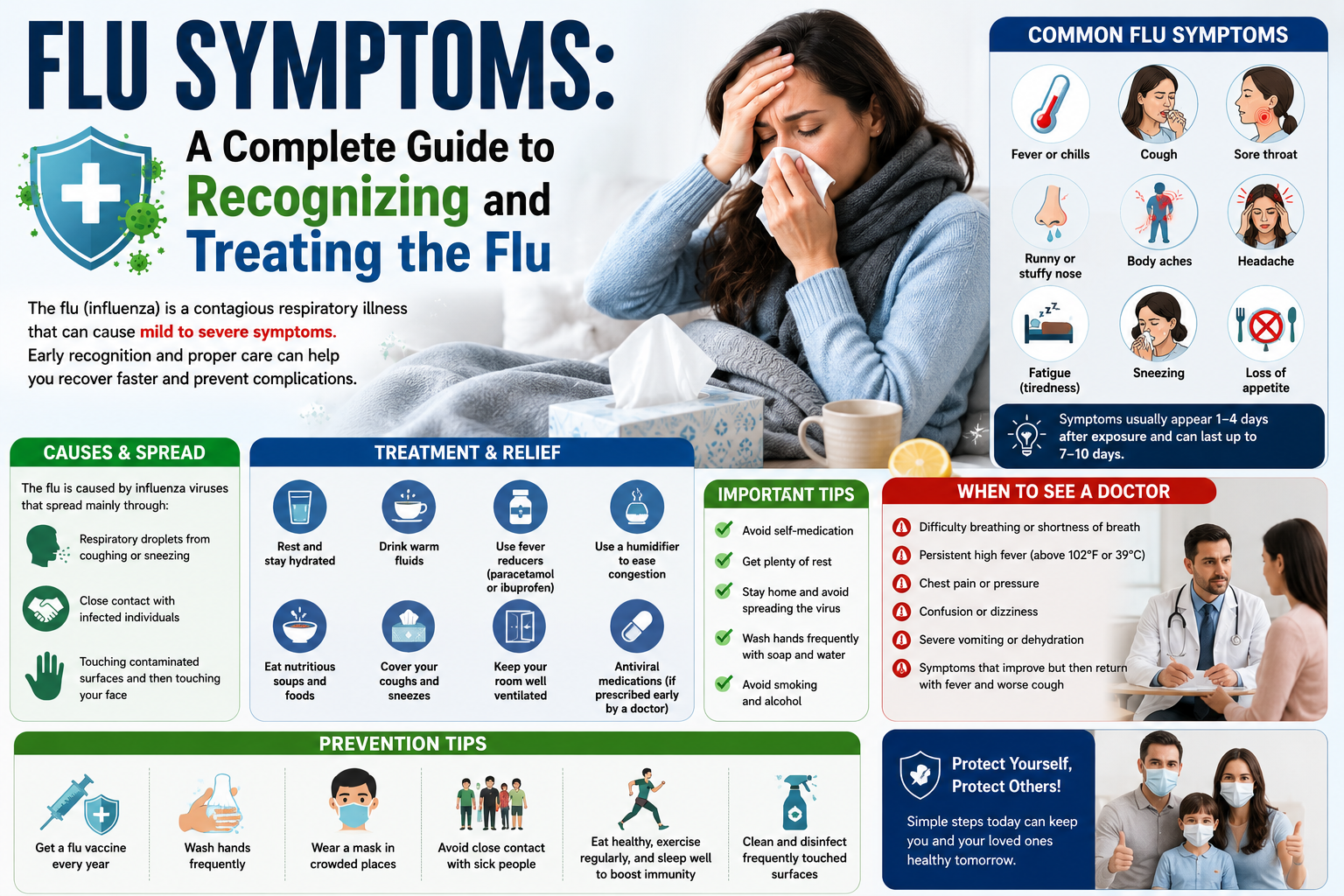
Flu symptoms typically come on suddenly and can range from mild to severe. The tricky thing about flu symptoms is that they can sometimes feel similar to a cold, but they're usually more intense. Here's what you need to watch for:
Classic Flu Symptoms
The most common flu symptoms include:
Fever: Most people with the flu develop a fever, usually between 100°F and 104°F (37.8°C to 40°C). The fever often appears suddenly and can last for several days.
Muscle and Body Aches: This is one of the hallmark flu symptoms that distinguish it from a cold. You might feel achiness all over your body—in your back, legs, arms, and joints. Some people describe it as feeling like they've been hit by a truck.
Fatigue and Weakness: Flu symptoms often include extreme tiredness that can last for weeks. This is why people say the flu "knocks you out." Even simple tasks feel exhausting.
Cough: A dry cough is common with flu symptoms. It usually starts a day or two after other symptoms appear and can persist for weeks, even after you've recovered from the other flu symptoms.
Headache: A severe headache is a frequent part of flu symptoms, often accompanied by sensitivity to light.
Sore Throat: Some people with flu symptoms experience a sore or scratchy throat, though this is more common with the common cold.
Congestion and Runny Nose: Interestingly, while the common cold typically brings congestion and a runny nose, these are less prominent flu symptoms. When they do occur with the flu, they're usually mild.
Chills: Many people with flu symptoms experience chills, often before the fever develops.
Flu Symptoms vs. Cold Symptoms: What’s the Difference?
One of the biggest questions people ask when they're not feeling well is whether they have a cold or the flu. Both are respiratory infections, but flu symptoms are generally more severe. Here's a quick comparison:
Cold Symptoms: Gradual onset, mild fatigue, sneezing, runny nose, sore throat, mild cough, no fever or low-grade fever (under 100°F).
Flu Symptoms: Sudden onset, severe fatigue, severe body aches, dry cough, high fever, chills, headache, sore throat may be present but is usually mild.
The key difference? Flu symptoms hit you like a wall, while cold symptoms develop gradually. If you wake up and feel absolutely miserable with a high fever and severe body aches, it's more likely to be the flu.
When to Seek Medical Help
Most cases of flu symptoms don't require hospitalization, but some situations warrant professional care. Consider seeing a doctor if:
- You have severe flu symptoms that aren't improving after a few days
- You're in a high-risk group (elderly, young children, pregnant women, immunocompromised)
- You develop flu symptoms and have underlying health conditions like asthma or heart disease
- Your flu symptoms worsen suddenly after initially improving
- You experience shortness of breath, chest pain, or severe weakness
- You're experiencing confusion or altered mental status
These could be signs of serious complications from flu symptoms, such as pneumonia or secondary bacterial infection.
How to Treat Flu Symptoms at Home
The majority of people with flu symptoms recover at home with rest and self-care. Here's what actually works:
Rest and Hydration
When you have flu symptoms, your body needs energy to fight the virus. Get plenty of sleep—this is not the time to push through and go to work. Aim for 8-10 hours per night plus naps if possible.
Stay hydrated. Drink plenty of water, warm tea, broth, or electrolyte drinks. When you have a fever, your body loses fluid quickly, so drinking enough liquid is crucial when dealing with flu symptoms.
Fever and Pain Management
Over-the-counter medications can help manage flu symptoms. Acetaminophen (Tylenol) or ibuprofen (Advil, Motrin) can reduce fever and relieve the body aches and headache that come with flu symptoms. Follow the recommended dosing instructions and don't exceed the maximum daily dose.
Important note: Don't give aspirin to children with flu symptoms, as it's been linked to a rare but serious condition called Reye's syndrome.
https://my.clevelandclinic.org/health/diseases/4335-influenza-flu
Antiviral Medications
If you catch flu symptoms early—ideally within 48 hours of when symptoms start—your doctor may prescribe antiviral medications like oseltamivir (Tamiflu) or zanamivir (Relenza). These medications can shorten the duration of flu symptoms by a day or two and may reduce the severity of illness, especially in high-risk individuals.
Soothe Your Symptoms
- For a sore throat: Gargle with salt water, suck on lozenges, or drink warm honey and lemon tea
- For congestion: Use a humidifier to add moisture to the air
- For cough: Honey can help soothe a cough (not for children under 1 year)
- For body aches: Apply warm compresses to areas that hurt
Nutrition
While you might not feel like eating when experiencing flu symptoms, proper nutrition supports your immune system. Try easy-to-digest foods like:
- Chicken soup (it's not just a myth—it actually helps with flu symptoms!)
- Broth
- Eggs
- Fruits and vegetables
- Whole grains
- Yogurt
Prevention: Stop Flu Symptoms Before They Start
The best approach to flu symptoms is to prevent them in the first place:
Get Vaccinated: The flu vaccine is updated annually and significantly reduces your risk of getting the flu. Even if you do develop flu symptoms after vaccination, they're usually milder.
Practice Good Hygiene: Wash your hands frequently, especially during flu season. Cover your mouth when coughing or sneezing, and avoid touching your face.
Avoid Sick People: If someone around you has flu symptoms, keep your distance when possible.
Maintain Healthy Habits: Get adequate sleep, eat well, exercise regularly, and manage stress. A strong immune system is your best defense against flu symptoms.
Clean Surfaces: The flu virus can live on surfaces for hours, so regularly clean frequently-touched items like doorknobs, light switches, and phones.
How Long Do Flu Symptoms Last?
This is a question everyone asks when they're dealing with the flu. Generally, most flu symptoms improve within 7-10 days. However, the cough can persist for weeks, and fatigue might linger for even longer, especially in older adults.
If you're still experiencing flu symptoms after two weeks, contact your doctor to rule out complications.
Special Considerations
Flu Symptoms in Children: Kids with the flu often experience the same flu symptoms as adults but may also have nausea, vomiting, or diarrhea. Watch them closely and contact your pediatrician if flu symptoms are severe.
Flu Symptoms During Pregnancy: Pregnant women are at higher risk for severe flu symptoms. If you're pregnant and develop flu symptoms, contact your doctor immediately.
Flu Symptoms in Elderly: Older adults are more vulnerable to serious complications from flu symptoms and should seek medical care promptly.
Final Thoughts on Flu Symptoms
Flu symptoms are uncomfortable and inconvenient, but they're usually not dangerous if you care for yourself properly. The key is recognizing flu symptoms early, staying home to avoid spreading the virus, and giving your body the rest it needs to recover.
Remember, if you suspect you have flu symptoms, don't hesitate to reach out to your healthcare provider—especially if you're in a high-risk group or if your symptoms aren't improving.
Take care of yourself, stay hydrated, get your rest, and you'll be back to normal soon. And next year, don't forget to get your flu shot—it's the best defense against flu symptoms.
The Anatomy of Flu Symptoms: What to Expect
Unlike a cold, which usually takes a few days to gradually build up, the flu is famous for its sudden ambush. You can feel perfectly fine in the morning and be completely bedridden by the afternoon.
When the influenza virus enters your respiratory tract, your immune system immediately mounts a defense. The symptoms you feel aren’t actually the virus damaging your body; they are your immune system fighting the war. Here are the hallmark flu symptoms to watch out for:
1. The Sudden Fever
A high fever—often ranging between 100°F and 104°F (38°C to 40°C)—is one of the most classic signs of the flu. While some adults might have the flu without a fever, it is incredibly common, especially in children. The sudden spike in temperature is your body’s way of trying to cook the virus to death. This is usually accompanied by intense chills and sweating as your body temperature fluctuates.
2. Deep Muscle and Body Aches
If you’ve ever had the flu, you know the specific, deep ache that settles into your bones. This isn't just feeling tired; it’s a systemic soreness that makes even your skin feel sensitive. This happens because your immune system releases chemicals called cytokines to help fight the virus, and these chemicals cause inflammation throughout your body, leading to those deep-tissue aches.
3. Overwhelming Fatigue
The kind of exhaustion that comes with the flu is profound. This isn't the "I stayed up too late watching Netflix" tired. This is a heavy, drain-your-energy-from-your-limbs fatigue that makes it hard to even keep your eyes open. Your body is using every ounce of energy to fight the infection, leaving you with nothing left in the tank.
4. The Dry, Hacking Cough
While a cold might give you a mild, productive cough, the flu typically brings a dry, persistent, and often painful hacking cough. The virus attacks the cells lining your airways, causing inflammation and irritation. This cough can linger long after the other symptoms have passed.
5. Severe Headaches
Flu-related headaches are often described as a dull, throbbing pain that wraps around your entire head, particularly behind your eyes. This is driven by a combination of the fever, sinus inflammation, and the general dehydration that comes with being sick.
6. Respiratory Misery
Along with the cough, you might experience a runny or stuffy nose, a sore throat, and sneezing. While these are often considered "cold" symptoms, when they are paired with a sudden fever and body aches, they point directly to the flu.
The Day-by-Day Flu Timeline
Understanding the lifecycle of the flu can help you manage your expectations and know when you’re contagious. Here is a general timeline of how flu symptoms progress:
Day 0 (Exposure): You come into contact with the virus, usually via respiratory droplets from an infected person’s cough or sneeze. You have no symptoms, but the virus is beginning to multiply in your body.
Day 1 (The Ambush): The symptoms hit like a freight train. You’ll likely experience a sudden fever, chills, severe fatigue, and body aches. This is when you are highly contagious.
Days 2-4 (The Peak): Your respiratory symptoms will start to worsen. The dry cough becomes more prominent, and your throat may be raw. Your fever might fluctuate, and you’ll spend most of your time in bed. You are still highly contagious during this window.
Days 5-7 (The Turn): The fever breaks, and your energy slowly begins to return. The body aches fade, but the cough and nasal congestion might linger. You start to feel human again, though still weak.
Days 8-14 (The Aftermath): Most of your major symptoms are gone, but that stubborn, dry cough can hang around for weeks. You are generally no longer contagious after the first 24 hours of being fever-free without the use of medication.
Cold vs. Flu: How to Tell the Difference
This is the most common question doctors get during the winter: "How do I know if it's a cold or the flu?" Because they are both respiratory illnesses caused by viruses, they share many symptoms. However, they are caused by entirely different viruses, and the way they present is very different.
Here is a quick breakdown to help you tell them apart:
- Onset: A cold comes on slowly over a few days. The flu hits you abruptly.
- Fever: Colds rarely cause fevers in adults. The flu almost always brings a sudden, high fever.
- Body Aches: Colds might give you a mild, tired feeling. The flu causes severe, deep aches in your muscles and joints.
- Fatigue: A cold might make you feel a bit run down. The flu causes extreme exhaustion that makes it difficult to perform daily tasks.
- Severity: Colds are generally mild and don't lead to serious health issues. The flu can lead to severe complications like pneumonia, bronchitis, and hospitalizations.
If you feel like you’ve been hit by a bus, it’s probably the flu. If you just have a runny nose and a mild sore throat, it’s likely a cold.
When to Seek Emergency Medical Care
For most healthy adults, the flu is miserable but manageable at home. However, the flu can become dangerous very quickly. Certain populations—the elderly, young children, pregnant women, and those with compromised immune systems—are at a much higher risk for severe complications.
If you or a loved one experience any of the following emergency flu symptoms, seek medical attention immediately:
- Difficulty breathing or shortness of breath
- Persistent pain or pressure in the chest or abdomen
- New confusion, severe dizziness, or inability to wake up
- Severe or persistent vomiting
- A fever or cough that improves but then returns or worsens significantly
- In children: bluish lips or face, rapid breathing, and extreme irritability
Don't try to "tough it out" if you are experiencing these red flags. Influenza can rapidly turn into pneumonia, which requires immediate medical intervention.
The Playbook: Treating Flu Symptoms in 2025
If you’ve determined that you have the flu, the name of the game is symptom management and supporting your immune system. Here is how to treat the flu effectively:
1. The 48-Hour Rule: Antiviral Medications
If you catch the flu early, your doctor can prescribe antiviral medications (like Tamiflu, Relenza, or Rapivab). These drugs don't cure the flu, but they can shorten the duration of your illness by about a day and, more importantly, prevent serious complications.
The catch? They are most effective if taken within the first 48 hours of your symptoms appearing. If you suspect you have the flu and you are in a high-risk group, don't wait—call your doctor immediately for a prescription.
2. Rest, Rest, and More Rest
This is not the time to "push through" the illness. Going to work or hitting the gym while you have the flu will only prolong your illness and spread the virus to others. Your body needs every ounce of energy to fight the infection. Cancel your plans, get into bed, and sleep as much as humanly possible.
3. Hydrate Like It’s Your Job
A fever makes you sweat, and a runny nose depletes your fluids. Dehydration will make your headache worse and your fatigue more profound. You don't just need water; you need electrolytes.
- Drink plenty of water and herbal teas (peppermint and chamomile are great for soothing the throat).
- Sip on bone broth or chicken soup. It provides hydration, essential sodium, and nutrients.
- Use electrolyte powders or sports drinks if you haven't been eating much.
4. Over-the-Counter Relief
To make the symptoms bearable while your body fights the virus, you can turn to your local pharmacy:
- For fever and body aches: Acetaminophen (Tylenol) or Ibuprofen (Advil/Motrin) are your best friends. They will help bring down your fever and ease the muscle aches.
- For the cough: A humidifier in your room can do wonders for a dry, hacking cough. If it's keeping you awake at night, look for a cough syrup containing dextromethorphan to suppress the reflex.
- For the sore throat: Gargle with warm salt water, use throat lozenges, and drink warm liquids with honey. (Note: Never give honey to a child under 1 year old).
Prevention: The Best Medicine
The absolute best way to treat flu symptoms is to never get them in the first place. While we can't avoid every germ, there are highly effective ways to protect yourself and your family during flu season.
The Flu Vaccine: Every year, scientists develop a flu vaccine designed to target the strains of the virus expected to be most common that season. Even if you do catch the flu after getting vaccinated, the shot significantly reduces the severity of your symptoms. It takes about two weeks for the antibodies to build up, so getting your shot in early autumn is ideal.
Hand Hygiene: The flu virus can live on hard surfaces (like doorknobs, phones, and elevator buttons) for up to 24 hours. Wash your hands frequently with soap and warm water for at least 20 seconds. If you don't have access to a sink, use an alcohol-based hand sanitizer containing at least 60% alcohol.
Avoid Touching Your Face: The virus enters your body through your mucous membranes—specifically your eyes, nose, and mouth. If you touch a contaminated surface and then rub your eye, you are giving the virus a direct invitation into your body.
Boost Your Immune System: A healthy immune system is your best defense. Prioritize 7-8 hours of sleep per night, eat a diet rich in immune-boosting vitamins (like Vitamin C, D, and Zinc), and manage your stress levels.
The Bottom Line
The flu is a formidable opponent, but it is one you can beat. By knowing the early warning signs of flu symptoms—the sudden fever, the deep aches, and the overwhelming fatigue—you can take immediate action.
Rest, hydrate, and don't hesitate to seek medical advice if you are in a high-risk category or if your symptoms become severe. Take care of your body, listen to what it needs, and before you know it, you'll be back on your feet, ready to take on the world again.
2 thoughts on “Flu Symptoms : A Complete Guide to Recognizing and Treating the Flu”