
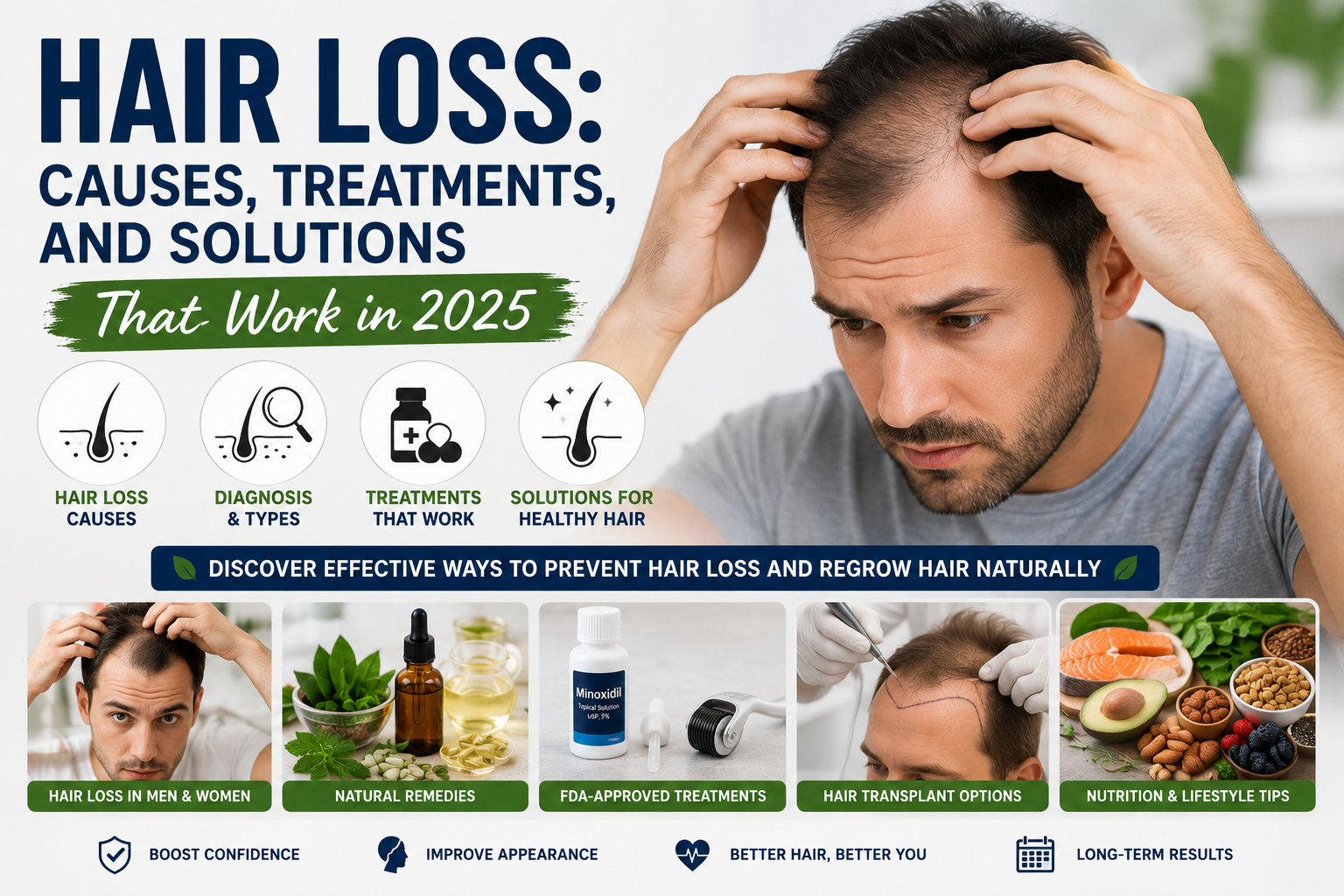

If you're reading this, chances are you've noticed more hair in your shower drain than usual, or maybe you're seeing a wider part in the mirror. You're not alone. Hair loss is one of the most searched health topics on Google right now, and for good reason—it affects millions of people worldwide, regardless of age or gender. The thing about hair loss is that it can be incredibly stressful, almost as if your body is betraying you. But here's the good news: understanding hair loss is the first step toward actually doing something about it.
In 2025, we have more options than ever before to address hair loss. From cutting-edge treatments to lifestyle changes that really work, there's genuine hope for anyone struggling with this issue. This comprehensive guide will walk you through everything you need to know about hair loss—what causes it, why it happens, and most importantly, what you can actually do about it.
What is Hair Loss and Why Should You Care?
Before we dive into solutions, let's talk about what hair loss actually is. Most people don't realize that losing some hair every day is completely normal. In fact, the average person loses between 50 to 100 hairs per day. Your hair has a natural growth cycle, and shedding is just part of that process.
But hair loss becomes a concern when you're losing significantly more hair than normal, when your hair is thinning noticeably, or when you're developing bald patches. This type of hair loss can seriously impact your confidence and quality of life. The psychological impact of hair loss shouldn't be underestimated—studies show that people experiencing significant hair loss often report anxiety, depression, and reduced self-esteem.
If you've noticed unusual hair loss, it's worth paying attention to. The earlier you address it, the better your chances of slowing it down or reversing it.
The Main Causes of Hair Loss: What’s Actually Going On?
Understanding why you're experiencing hair loss is crucial because the cause determines the treatment. Let's break down the most common reasons people deal with hair loss in 2025.
Genetic Factors (Male and Female Pattern Baldness)
Here's a reality check: if your parents or grandparents experienced hair loss, you're more likely to as well. About 95% of hair loss in men is caused by male pattern baldness, which is largely genetic. Women experience female pattern baldness too, and it's equally genetic.
Male pattern baldness happens because some hair follicles are sensitive to a hormone called DHT (dihydrotestosterone). Your genes determine how sensitive your follicles are to this hormone. If you're genetically predisposed, DHT causes hair follicles to shrink over time—a process called miniaturization. The result? Hair loss that typically starts with a receding hairline or thinning at the crown.
Female pattern baldness works similarly but usually shows up as overall thinning rather than distinct bald patches. Women might notice their hair getting thinner throughout the scalp, especially along the part line.
Stress and Trauma
Believe it or not, stress is a legitimate cause of hair loss. When you experience physical or emotional stress, your body can push hair follicles into what's called the "telogen phase"—a resting phase where hair falls out. This is called telogen effluvium, and it's completely reversible once the stress subsides.
If you've recently gone through a major life event—a job loss, relationship breakdown, serious illness, or even a surgical procedure—and you're noticing hair loss a few months later, stress is likely the culprit. The good news? Once you manage the stress, your hair usually grows back.
Nutritional Deficiencies
Your hair needs proper nutrition to thrive. If you're lacking certain vitamins and minerals, your hair will let you know. Common nutritional causes of hair loss include:
- Iron deficiency: This is especially common in women. Without enough iron, your body can't produce hemoglobin effectively, which means your hair follicles don't get enough oxygen.
- Vitamin D deficiency: Studies have linked low vitamin D levels to various types of hair loss.
- B vitamins: Biotin, B12, and other B vitamins are essential for hair health.
- Zinc deficiency: Zinc plays a critical role in hair growth and immune function.
- Protein deficiency: Your hair is made of protein, so if you're not getting enough, your hair suffers.
The encouraging part about nutritional hair loss is that it's often easily fixable with dietary changes or supplements.
Medical Conditions and Medications
Several health conditions can cause hair loss. Thyroid disorders, autoimmune diseases like alopecia areata, polycystic ovary syndrome (PCOS), and lupus can all lead to hair loss. Additionally, certain medications—including some blood pressure medications, antidepressants, and chemotherapy drugs—can cause hair loss as a side effect.
Hormonal Changes
Hormones are powerful things. Pregnancy, menopause, and thyroid issues can all trigger hair loss. Many women experience postpartum hair loss a few months after giving birth when hormones readjust. Similarly, menopause often brings noticeable hair thinning due to declining estrogen levels.
https://my.clevelandclinic.org/health/diseases/21753-hair-loss
Proven Treatments for Hair Loss That Actually Work
Now for the part you've been waiting for—what can you actually do about hair loss? The good news is that 2025 offers more effective solutions than ever before.
Topical Treatments: Minoxidil
Minoxidil, commonly known by the brand name Rogaine, is one of the most well-researched and proven treatments for hair loss. It works by extending the growth phase of hair and increasing blood flow to hair follicles. You apply it directly to your scalp, typically twice daily.
Minoxidil works best for early-stage hair loss and is effective for both male and female pattern baldness. Here's what you should know:
- Results take time: You won't see results for at least 3-4 months, and it can take up to a year to see full benefits.
- It's preventative: Minoxidil works better at preventing further hair loss than it does at regrowing hair.
- You need to keep using it: If you stop, any regrowth will likely fall out again.
The advantage of minoxidil is that it's available over-the-counter, relatively affordable, and has minimal side effects for most people.
Oral Medications: Finasteride
Finasteride (Propecia) is an oral medication that works by blocking the enzyme that converts testosterone to DHT. For people with genetic hair loss, this can be a game-changer.
Finasteride has strong clinical evidence behind it and can actually regrow hair in some cases. However, it's important to know:
- It's only for men: Women, especially those who are or could become pregnant, should not use finasteride due to potential side effects.
- Results take months: Expect to wait 3-6 months to see any improvement.
- Consistency matters: Like minoxidil, you need to keep taking it for results to continue.
Many people combine minoxidil and finasteride for better results, and this combination has been shown to be more effective than either treatment alone.
Newer Treatment Options
In 2025, we're seeing some exciting new developments in hair loss treatment:
Low-Level Laser Therapy (LLLT): Laser caps and combs use light wavelengths to stimulate hair follicles. While the research is ongoing, some studies show promising results, especially when combined with other treatments.
Platelet-Rich Plasma (PRP): This involves taking a sample of your blood, concentrating the platelets, and injecting them into your scalp. The growth factors in platelets may stimulate hair growth. It's gaining popularity, though it's expensive and results are mixed.
Hair Transplants: If you're dealing with significant hair loss and other treatments haven't worked, modern hair transplant surgery has come a long way. The results look natural, and recovery times are shorter than they used to be.
Lifestyle Changes That Support Hair Health
While medications and treatments are important, don't underestimate the power of lifestyle changes in addressing hair loss.
Nutrition Matters
Start with your diet. Make sure you're getting:
- Protein: Aim for 50-60 grams daily from sources like chicken, fish, eggs, or legumes.
- Iron-rich foods: Red meat, spinach, and fortified cereals help prevent iron-deficiency hair loss.
- Omega-3 fatty acids: Salmon, walnuts, and flaxseeds support scalp health.
- Biotin and B vitamins: Found in eggs, almonds, and whole grains.
Many people find that taking a quality multivitamin specifically formulated for hair, skin, and nails makes a noticeable difference.
Stress Management
This cannot be overstated. Find what works for you—whether it's meditation, yoga, exercise, or just spending time in nature. Chronic stress doesn't just affect your hair; it impacts your entire health. Even 20 minutes of daily exercise can significantly reduce stress levels and may help with hair loss.
Scalp Care
Be gentle with your hair and scalp:
- Avoid tight hairstyles that pull on your hair (this can cause traction alopecia).
- Use a gentle shampoo and lukewarm water—hot water can damage hair.
- Limit heat styling and chemical treatments.
- Don't brush aggressively when your hair is wet and more fragile.
Sleep and Recovery
Your body does much of its repair work while you sleep. Aim for 7-9 hours of quality sleep per night. During sleep, your body produces melatonin, which has been shown to support hair growth.
When Should You See a Doctor?
If you're experiencing hair loss, it's worth consulting a dermatologist, especially if:
- You're losing hair rapidly or in patches
- You've noticed significant changes in a short period
- You have other symptoms like scalp pain, redness, or itching
- Over-the-counter treatments haven't helped after 3-6 months
A dermatologist can run tests to identify underlying causes like thyroid issues, nutritional deficiencies, or hormonal imbalances. Sometimes treating the underlying condition is all you need to stop hair loss.
The Bottom Line on Hair Loss in 2025
Hair loss is incredibly common, and it's nothing to be ashamed of. What matters is that you don't have to accept it as inevitable. Between proven medical treatments, natural lifestyle approaches, and newer emerging therapies, there are genuinely effective options available now.
The key is to start early. Hair loss is much easier to prevent from getting worse than it is to reverse, so if you're noticing changes, don't wait. Try to identify the cause—whether it's stress, nutrition, genetics, or something medical—and address it accordingly.
Remember, dealing with hair loss takes patience. Most treatments require 3-6 months to show results, and some take longer. But thousands of people have successfully slowed or reversed their hair loss, and so can you.
Whether you go the medication route, make lifestyle changes, pursue newer treatments like PRP, or combine several approaches, there's real hope. Your hair loss doesn't have to be permanent, and with the right strategy tailored to your specific situation, you can take back control.
Start today. Talk to your doctor, evaluate your diet and stress levels, and consider which treatment options align with your goals and budget. Your hair—and your confidence—will thank you.
Hair Loss: Causes, Treatments, and Solutions That Work in 2025
There’s a specific kind of panic that sets in when you’re brushing your hair and notice an alarming amount of strands wrapped around the bristles. Or maybe it’s the slow, creeping realization that your part is getting wider, or your hairline is inching further back than it was in photos from just a few years ago.
If you are experiencing this, take a deep breath. You are not alone.
Hair loss affects tens of millions of people worldwide, crossing lines of gender, age, and background. For a long time, the options for treating it felt like a roll of the dice—snake oils, miracle shampoos that did nothing, and the looming threat of obvious, painful hair transplants.
But we are in 2025 now, and the landscape of hair restoration has fundamentally changed. Science has caught up, technology has advanced, and we now have a deeper understanding of the follicular ecosystem than ever before.
In this comprehensive guide, we are going to strip away the noise and look at the actual science of hair loss. We’ll explore what’s really causing your hair to thin, debunk the myths, and most importantly, break down the treatments and solutions that actually work in 2025—ranging from time-tested medications to cutting-edge regenerative therapies.
The Root of the Problem: What Causes Hair Loss?
Before we can talk about growing hair back, we have to understand why it’s falling out in the first place. Hair loss is rarely caused by just one thing; it’s usually a combination of genetics, hormones, and lifestyle factors.
1. Genetics and Hormones (Androgenetic Alopecia)
This is the big one. Androgenetic alopecia, commonly known as male-pattern baldness or female-pattern hair loss, accounts for the vast majority of hair loss cases.
If you have this, it’s in your DNA. Your hair follicles have an inherited sensitivity to a hormone called DHT (dihydrotestosterone), which is a byproduct of testosterone. When DHT binds to these sensitive follicles, it causes them to shrink over time (a process called miniaturization). The hair grows back thinner, shorter, and lighter with each cycle, until the follicle eventually stops producing hair altogether.
2. Stress and Trauma (Telogen Effluvium)
Have you ever noticed your hair falling out a few months after a severely stressful event? That’s telogen effluvium.
Normally, your hairs are in different stages of the growth cycle. Severe stress, illness, surgery, rapid weight loss, or even a bad bout of COVID-19 can shock your system, pushing a large percentage of your hair follicles into the "telogen" (resting/shedding) phase all at once. The good news? This type of hair loss is usually temporary. Once the stressor is removed, the hair typically grows back.
3. Nutritional Deficiencies
Your hair is a non-essential tissue. That means when your body is running low on nutrients, it will prioritize your vital organs over your hair. Low levels of iron, vitamin D, zinc, B12, and even protein can trigger shedding. If your hair loss is accompanied by fatigue or brittle nails, a simple blood test might reveal the culprit.
4. Autoimmune Conditions (Alopecia Areata)
Sometimes, the body’s immune system mistakenly attacks its own hair follicles, resulting in patchy hair loss. This can range from small, coin-sized bald spots to complete loss of hair on the scalp (Alopecia Totalis) or the entire body (Alopecia Universalis). While highly distressing, breakthroughs in 2025 have made treating this much more manageable.
5. Environmental Factors and Styling
We live in a world full of pollutants, and our hair takes a beating. Traction alopecia (hair loss from tight hairstyles like tight buns, braids, or extensions), chemical damage from over-processing, and chronic scalp inflammation can all contribute to premature follicle death.
Debunking the Biggest Hair Loss Myths
When you’re desperate to keep your hair, you’ll believe almost anything. Let’s clear the air on a few persistent myths that might be wasting your time and money:
- Myth: Wearing a hat causes hair loss. Fact: Unless your hat is painfully tight and cutting off circulation to your scalp, it isn't doing any damage. The hat is just covering the hair loss that’s already happening.
- Myth: Washing your hair every day makes it fall out. Fact: The hairs you see in the drain after washing were already in the shedding phase. Not washing your hair won’t stop the shedding; it will just fall out on a different day.
- Myth: Higher testosterone means more hair loss. Fact: It’s not about how much testosterone you have; it’s about how sensitive your follicles are to DHT. You can have high testosterone and a full head of hair, or low testosterone and go completely bald—it’s all about the receptor sensitivity.
The Gold Standard: Proven Treatments for Hair Loss
If you’re looking for scientifically proven ways to stop hair loss and stimulate regrowth, you need to look at the heavy hitters. These are the FDA-approved treatments that have stood the test of time and continue to be the foundation of any solid hair restoration protocol in 2025.
Minoxidil (The Stimulator)
You probably know this as Rogaine, but the generic versions are just as effective. Minoxidil is a topical liquid or foam applied to the scalp. While the exact mechanism is still slightly debated, it is believed to be a vasodilator that increases blood flow and nutrient delivery to the follicles, effectively forcing them into the growth (anagen) phase.
The 2025 Update: Topical Minoxidil can leave hair feeling greasy and cause scalp irritation. Today, many dermatologists are prescribing low-dose oral minoxidil. Taking a tiny daily pill has been shown to be highly effective with fewer topical side effects, revolutionizing the way doctors treat pattern baldness.
Finasteride and Dutasteride (The Blockers)
If Minoxidil is the gas pedal, Finasteride is the brake. Finasteride is an oral prescription medication that inhibits the enzyme (5-alpha-reductase) responsible for converting testosterone into DHT. By lowering DHT levels in the scalp, it effectively stops the follicle-shrinking process in its tracks. Dutasteride is a similar, slightly more potent drug that blocks both types of the 5-AR enzyme.
The 2025 Update: Many people (both men and women) are wary of oral anti-androgens due to potential side effects. Topical formulations of Finasteride and Dutasteride are now widely compounded and prescribed. They deliver the DHT-blocking power directly to the scalp, significantly reducing systemic absorption and side effects.
Ketoconazole Shampoos
Often sold under the brand name Nizoral, this is technically an anti-dandruff ingredient. However, studies have shown that Ketoconazole has mild anti-androgen properties and reduces scalp inflammation. Using it a couple of times a week is an excellent adjunct therapy to keep the scalp environment healthy.
The Future is Now: 2025 Innovations in Hair Loss Solutions
While the standard medications are great, the real excitement in 2025 comes from regenerative medicine and technology. We are moving away from simply managing hair loss and moving toward actually healing the follicles.
Exosome Therapy (The PRP Upgrade)
A few years ago, Platelet-Rich Plasma (PRP) was the darling of the hair restoration world. Doctors would draw your blood, spin it down to isolate the platelets, and inject them into your scalp. While PRP is still used, the science has moved on.
In 2025, Exosome Therapy is leading the pack. Exosomes are extracellular vesicles—essentially, the "messages" that stem cells send to other cells to tell them to heal, regenerate, and grow. Derived from ethically sourced stem cells, injecting exosomes into the scalp delivers a massive, concentrated dose of growth factors directly to dormant hair follicles. It is showing results that far outpace PRP, with patients seeing thicker, denser hair in fewer sessions.
JAK Inhibitors (For Alopecia Areata)
For those suffering from autoimmune-related hair loss (alopecia areata), the options used to be limited to harsh steroids or immunosuppressants. Today, a class of drugs called JAK (Janus kinase) inhibitors, such as Baricitinib and Ritlecitinib, have changed the game. These pills essentially "turn off" the faulty immune response attacking the hair follicles, allowing patients with severe alopecia to regrow full heads of hair. This is one of the biggest medical breakthroughs of the decade.
AI-Driven Trichology and Scalp Scanning
You can’t treat what you can’t see. High-end clinics now use AI-powered trichoscopes—high-definition microscopic cameras that map your scalp down to the individual follicle. The AI analyzes your hair density, follicle diameter, and the ratio of anagen (growing) to telogen (resting) hairs. This allows specialists to predict future hair loss before it’s visible to the naked eye and tailor treatments to your specific scalp biology.
Advanced FUE and DHI Hair Transplants
Hair transplants have come a long way from the "doll hair" plugs of the 90s. Today’s Follicular Unit Extraction (FUE) and Direct Hair Implantation (DHI) are meticulous, minimally invasive procedures. Surgeons harvest individual follicular units from the back of your head (where hair is immune to DHT) and implant them into thinning areas.
With robotic-assisted extraction and highly refined implanter pens, the survival rate of transplanted hairs is near 95% in 2025. The result? A completely natural, undetectable hairline that lasts a lifetime.
Holistic Approaches: Lifestyle and Natural Solutions
While science gives us powerful tools, we cannot ignore the foundation. If your body is unhealthy, it will reject hair growth. Here is how to optimize your lifestyle to support your treatments.
The “Hair Diet”
Your hair is primarily made of a protein called keratin. If you aren't eating enough high-quality protein, your body will shut down hair growth.
- Iron: Especially important for women. Iron deficiency is a leading cause of female hair loss. Incorporate spinach, lentils, and red meat.
- Vitamin D: The "sunshine vitamin" acts like a hormone in the body and is crucial for initiating the hair growth cycle. Most of us are deficient, so supplementing is often necessary.
- Omega-3s: Found in fatty fish, walnuts, and flaxseeds. Omega-3s reduce scalp inflammation, creating a healthy environment for follicles to thrive.
Scalp Care and Micro-Needling
Don’t ignore the skin on top of your head. A healthy scalp is the soil from which your hair grows. Chronic dandruff, seborrheic dermatitis, and product buildup can suffocate follicles.
Micro-needling (Derma-rolling): This involves rolling a device with tiny needles over the scalp. It creates micro-injuries that trigger a healing response, increasing collagen production and blood flow. More importantly, clinical studies show that micro-needling dramatically increases the absorption and efficacy of topical Minoxidil.
Stress Management
Since stress is a known trigger for telogen effluvium, managing your cortisol levels is non-negotiable. Whether it’s through meditation, weightlifting, yoga, or simply prioritizing 8 hours of sleep, keeping your nervous system regulated is a vital part of your hair loss prevention strategy.
Your Next Steps: Building a 2025 Hair Loss Protocol
Reading about all these options can feel overwhelming, but the most important step is simply taking action. The longer hair follicles remain dormant, the harder they are to revive.
Here is how you can build your action plan:
- Get a Diagnosis: Stop guessing. Find a board-certified dermatologist or a specialized trichologist. Ask for a blood panel to check for vitamin deficiencies and thyroid issues, and get a scalp analysis to determine exactly what type of hair loss you have.
- Start the Basics: If your diagnosis is genetic pattern baldness, don't wait to try experimental things first. Start the proven protocols—Minoxidil and a DHT blocker (oral or topical)—immediately. Consistency is more important than intensity.
- Optimize Your Health: Fix your diet, manage your stress, and start taking care of your scalp.
- Level Up If Needed: If you are looking for accelerated regrowth, or if you've lost hair that medications won't bring back, consult a specialist about Exosome therapy or an FUE/DHI transplant.
The Bottom Line
Experiencing hair loss can feel isolating, but it doesn't have to be a permanent reality. In 2025, we are armed with better data, more effective medications, and regenerative technologies that were the stuff of science fiction just a decade ago.
You don't have to just accept a receding hairline or a thinning crown. By understanding the root causes of hair loss and utilizing the proven, modern treatments available today, you have the power to take control of your hair, your confidence, and your future.
Don't let another month go by watching your hair go down the drain. Take the first step today. Your future self—and your future hair—will thank you.
One thought on “Hair Loss: Causes, Treatments, and Solutions That Work in 2025”