
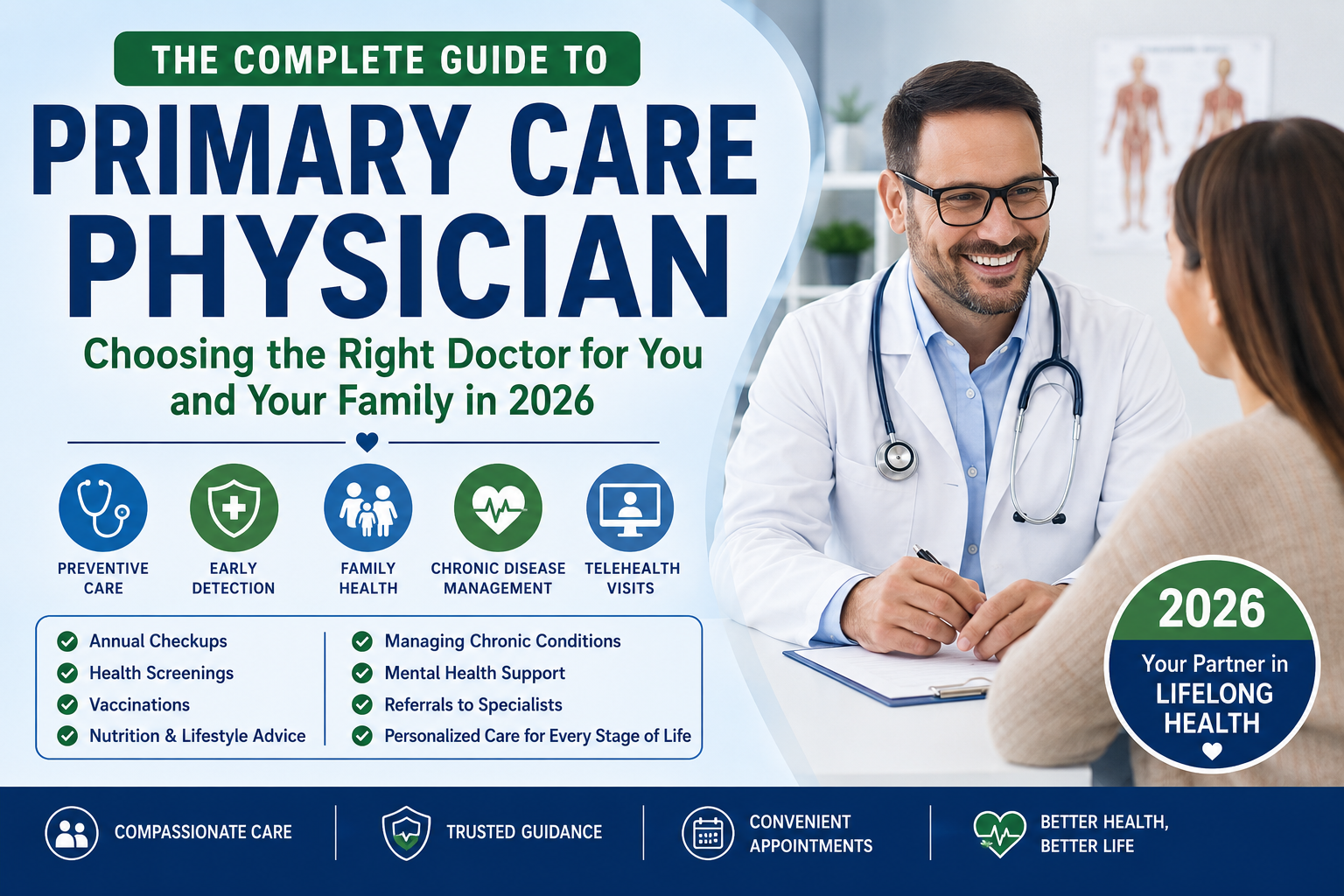

Good health starts with the right medical care, and for most people, that begins with a primary care physician. Whether you need an annual checkup, help managing a chronic illness, or advice about staying healthy, a primary care physician is often the first healthcare professional you should see.
In today's healthcare system, having a trusted doctor who understands your medical history can improve your overall well-being and help detect health problems before they become serious. Preventive care, routine screenings, vaccinations, and personalized health advice all play an important role in helping people live longer and healthier lives.
This guide explains everything you need to know about choosing a primary care physician, the services they provide, and why having one is one of the best investments you can make in your health.
What Is a Primary Care Physician?
A primary care physician (PCP) is a doctor who provides general medical care for people of all ages or specific age groups. They are usually the first doctor you visit when you have a health concern.
Instead of focusing on one part of the body or a single disease, primary care physicians provide comprehensive healthcare. They diagnose common illnesses, monitor chronic conditions, recommend preventive care, and refer patients to specialists when necessary.
Many people think of their PCP as their long-term healthcare partner because they oversee every aspect of their health.
Why Is a Primary Care Physician Important?
A primary care physician helps you stay healthy instead of simply treating illnesses after they appear.
Some of the biggest benefits include:
- Early disease detection
- Preventive healthcare
- Personalized treatment plans
- Better management of chronic illnesses
- Health education
- Vaccinations
- Regular health screenings
- Coordination with specialists
- Lower healthcare costs over time
Research consistently shows that people who have a regular primary care physician often experience better health outcomes than those who rely only on emergency care.
What Does a Primary Care Physician Do?
Primary care physicians provide a wide variety of healthcare services.
These include:
Annual Physical Exams
Routine checkups help monitor your health and identify potential problems early.
A typical exam may include:
- Blood pressure check
- Weight measurement
- Heart examination
- Lung examination
- Vision assessment
- Medical history review
Preventive Care
Preventive care focuses on stopping diseases before they develop.
Examples include:
- Vaccinations
- Cancer screenings
- Cholesterol testing
- Diabetes screening
- Blood pressure monitoring
- Lifestyle counseling
Diagnosis and Treatment
Primary care physicians diagnose many common conditions, including:
- Cold and flu
- Ear infections
- Allergies
- Asthma
- Skin conditions
- Urinary tract infections
- Minor injuries
Chronic Disease Management
Many people live with long-term medical conditions.
Primary care physicians help manage illnesses such as:
- Diabetes
- High blood pressure
- High cholesterol
- Arthritis
- Heart disease
- Thyroid disorders
Regular monitoring helps reduce complications and improve quality of life.
Mental Health Support
Physical and mental health are closely connected.
Many primary care physicians help identify and manage:
- Anxiety
- Depression
- Stress
- Sleep disorders
When needed, they can refer patients to psychologists, psychiatrists, or counselors for specialized care.
Types of Primary Care Physicians
Different doctors specialize in caring for different groups of patients.
Family Medicine Physicians
Family doctors care for patients of all ages, from infants to older adults.
They often treat multiple generations within the same family.
Internal Medicine Physicians
These doctors specialize in caring for adults.
They focus on preventing, diagnosing, and treating adult diseases.
Pediatricians
Pediatricians provide healthcare for infants, children, and teenagers.
Geriatric Physicians
These doctors specialize in caring for older adults and age-related health conditions.
When Should You Visit a Primary Care Physician?
You should schedule an appointment if you:
- Need a yearly physical
- Feel sick
- Have ongoing pain
- Need vaccinations
- Require prescription refills
- Notice unusual symptoms
- Need health advice
- Want routine blood work
- Have questions about nutrition or exercise
Even if you feel healthy, regular checkups are an important part of preventive care.
Benefits of Having One Doctor
Seeing the same physician over time offers many advantages.
They become familiar with your:
- Medical history
- Family history
- Allergies
- Medications
- Lifestyle
- Personal health goals
This long-term relationship often leads to better care and more accurate diagnoses.
Preventive Healthcare Services
Preventive medicine helps reduce the risk of serious illness.
Common preventive services include:
Blood Pressure Checks
High blood pressure often has no symptoms but can increase the risk of heart disease and stroke.
Cholesterol Screening
Monitoring cholesterol levels helps reduce the risk of cardiovascular disease.
Diabetes Screening
Early diagnosis allows treatment before complications develop.
Cancer Screenings
Your physician may recommend screenings for:
- Breast cancer
- Cervical cancer
- Colon cancer
- Prostate cancer
- Skin cancer
Recommendations vary based on age, family history, and personal risk factors.
Immunizations
Vaccines help protect against many infectious diseases.
Adults should stay current with recommended immunizations, including seasonal vaccines and boosters when appropriate.
Managing Chronic Conditions
Millions of people live with chronic diseases.
A primary care physician helps patients:
- Monitor symptoms
- Adjust medications
- Order laboratory tests
- Recommend lifestyle changes
- Coordinate specialist care
- Prevent complications
Regular follow-up visits are essential for long-term health.
Lifestyle Counseling
Good health depends on more than medication.
Primary care physicians often provide advice on:
- Healthy eating
- Exercise
- Weight management
- Sleep habits
- Stress reduction
- Smoking cessation
- Alcohol moderation
Small lifestyle improvements can make a significant difference over time.
When Will You Be Referred to a Specialist?
Sometimes specialized care is necessary.
Your physician may refer you to:
- Cardiologists
- Dermatologists
- Orthopedic surgeons
- Neurologists
- Endocrinologists
- Gastroenterologists
- Oncologists
- Mental health professionals
Your primary care physician continues coordinating your overall healthcare even after specialist referrals.
Choosing the Right Primary Care Physician
Finding the right doctor is an important decision.
Consider these factors:
Experience
Choose a physician with experience treating patients who have similar health concerns.
Credentials
Verify board certification and professional licensing.
Communication
A good physician listens carefully, explains medical information clearly, and answers your questions respectfully.
Location
A nearby office makes regular appointments easier.
Office Hours
Flexible scheduling can be helpful if you work or attend school.
Insurance
Confirm that the physician accepts your health insurance plan.
Reviews
Patient reviews can provide useful insights into appointment availability, staff professionalism, and communication.
Questions to Ask During Your First Visit
Preparing questions helps you get the most from your appointment.
Consider asking:
- How often should I have checkups?
- Which screenings do I need?
- Are my vaccinations up to date?
- What lifestyle changes would benefit me?
- Should I see any specialists?
- How can I lower my risk of chronic disease?
Telehealth and Virtual Care
Many primary care physicians now offer virtual appointments.
Telehealth can be useful for:
- Follow-up visits
- Medication reviews
- Minor illnesses
- Mental health discussions
- Test result reviews
Virtual care saves travel time and increases access to healthcare for many patients.
Health Insurance and Costs
The cost of primary care depends on several factors, including your location, insurance coverage, and the type of visit.
Common expenses may include:
- Office visits
- Annual physicals
- Laboratory tests
- Vaccinations
- Diagnostic imaging
- Prescription medications
Many insurance plans cover preventive services at little or no additional cost, though coverage varies by provider and policy. Always confirm your benefits before scheduling appointments.
Tips for Staying Healthy
Your primary care physician can guide you, but healthy daily habits are equally important.
Simple habits include:
- Eat balanced meals with fruits, vegetables, whole grains, and lean protein.
- Exercise for at least 150 minutes each week.
- Get enough quality sleep each night.
- Stay hydrated throughout the day.
- Avoid tobacco products.
- Limit alcohol intake.
- Manage stress through healthy coping strategies.
- Keep vaccinations current.
- Attend regular checkups.
- Follow your treatment plan if you have a chronic condition.
Consistency is often more important than perfection.
Common Mistakes People Make
Avoid these common healthcare mistakes:
- Waiting until you're very sick before seeing a doctor.
- Skipping annual wellness visits.
- Ignoring recommended screenings.
- Not taking medications as prescribed.
- Failing to mention new symptoms.
- Changing medications without medical advice.
- Missing follow-up appointments.
Preventive care can help catch problems early, when treatment is often simpler and more effective.
Frequently Asked Questions (FAQ)
What is a primary care physician?
A primary care physician is a healthcare provider who offers routine medical care, preventive services, diagnosis, treatment of common illnesses, and management of chronic diseases.
How often should I visit my primary care physician?
Most adults benefit from an annual wellness visit, though people with ongoing health conditions may need more frequent appointments.
Can a primary care physician treat mental health conditions?
Yes. Many primary care physicians evaluate and manage common concerns such as anxiety, depression, stress, and sleep problems. They can also refer patients to mental health specialists when additional care is needed.
Do I need a referral to see a specialist?
This depends on your health insurance plan. Some plans require a referral from your primary care physician, while others allow direct access to specialists.
Is telehealth available?
Many clinics now provide virtual appointments for follow-up care, medication management, and certain non-emergency health concerns.
Final Thoughts
Choosing the right primary care physician is one of the most important decisions you can make for your long-term health. A trusted physician helps you prevent illness, manage existing conditions, and navigate the healthcare system with confidence.
Regular checkups, healthy lifestyle choices, and open communication with your doctor create a strong foundation for lifelong wellness. Whether you're scheduling your first appointment or looking for a new provider, building a lasting relationship with a knowledgeable primary care physician can lead to better health outcomes and greater peace of mind.
Your health is an ongoing journey. By making preventive care a priority and partnering with a dedicated primary care physician, you can take meaningful steps toward a healthier future in 2026 and beyond.
https://dominion.health/index.php/2025/12/19/primary-physician
One thought on “Primary Care Physician: Complete Guide to Choosing the Right Doctor (2026)”