
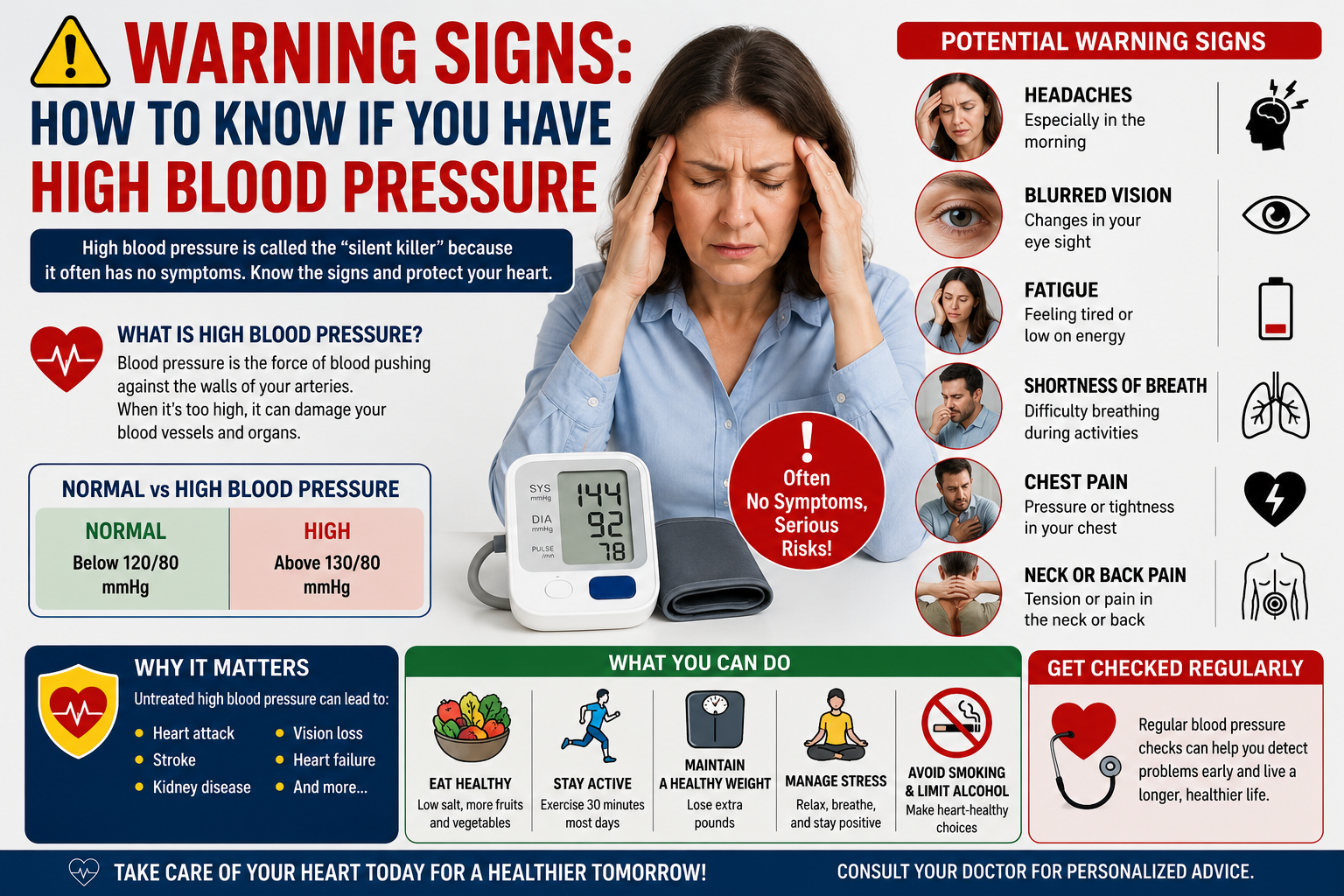

High blood pressure, often referred to as hypertension, is a widespread health condition that affects millions of people globally. Often dubbed the "Silent Killer," high blood pressure rarely presents obvious symptoms in its early stages, making it incredibly difficult to detect without regular medical check-ups. However, when blood pressure reaches dangerously high levels, the body begins to send distress signals.
Understanding the warning signs of high blood pressure is crucial for preventing severe health complications such as heart attacks, strokes, and kidney failure. In this comprehensive guide, we will explore what high blood pressure is, the subtle and severe warning signs you should never ignore, the risk factors involved, and how to take control of your health today.
What is High Blood Pressure?
Before diving into the symptoms, it is important to understand what high blood pressure actually is. Blood pressure is the force exerted by your blood against the walls of your arteries as your heart pumps it around your body. It is measured in millimeters of mercury (mmHg) and is recorded as two numbers:
- Systolic Pressure (the top number): The pressure in your arteries when your heart beats.
- Diastolic Pressure (the bottom number): The pressure in your arteries between heartbeats.
A normal blood pressure reading is generally around 120/80 mmHg. High blood pressure is diagnosed when your readings consistently exceed 130/80 mmHg or higher. When these numbers remain elevated over time, the excessive force can damage the delicate tissues inside your arteries, leading to plaque buildup, blood clots, and ultimately, life-threatening cardiovascular events.
The “Silent Killer” Phenomenon
The most dangerous aspect of high blood pressure is its lack of symptoms. In its early and even moderate stages, high blood pressure typically produces zero physical signs. People can have dangerously high blood pressure for years without feeling unwell. This is why medical professionals strongly emphasize the importance of routine blood pressure monitoring. Relying solely on how you feel is a dangerous game when it comes to hypertension.
However, when blood pressure spikes rapidly or remains untreated for an extended period, the body can no longer compensate, and warning signs begin to emerge.
Early and Subtle Warning Signs of High Blood Pressure
While you may not feel symptoms early on, some people with high blood pressure report experiencing subtle, non-specific symptoms. It is important to note that these symptoms can easily be mistaken for other conditions, but if they are persistent, they warrant a blood pressure check.
1. Morning Headaches
Waking up with a throbbing headache, particularly at the back of the head, can be an early indicator of high blood pressure. These headaches are often most severe in the morning and gradually subside as the day goes on. While tension and dehydration can also cause morning headaches, a persistent pattern should not be ignored.
2. Dizziness and Lightheadedness
Feeling unsteady, dizzy, or lightheaded can occur when high blood pressure affects the blood flow to your brain. Sudden bouts of dizziness, especially when standing up quickly, can be a sign that your cardiovascular system is struggling to regulate pressure effectively.
3. Nosebleeds (Epistaxis)
While dry air and allergies are the most common causes of nosebleeds, frequent or severe nosebleeds without an obvious cause can be linked to high blood pressure. When blood pressure is elevated, the tiny, delicate blood vessels inside the nose are more prone to rupturing.
4. Facial Flushing
If you notice your face frequently turning red, particularly after experiencing stress or consuming certain foods, it could be a subtle sign of high blood pressure. Blood vessels in the face can dilate in response to sudden spikes in pressure, causing a flushed appearance.
5. Blood Spots in the Eyes
Subconjunctival hemorrhage, or blood spots in the whites of the eyes, can occur when tiny blood vessels burst. While this can happen for various reasons, individuals with high blood pressure are more susceptible, as the elevated pressure weakens the blood vessels over time.
Severe Warning Signs: Symptoms of a Hypertensive Crisis
A hypertensive crisis occurs when blood pressure readings spike to 180/120 mmHg or higher. This is a medical emergency that requires immediate attention. If you experience any of the following symptoms alongside a known high blood pressure reading, seek emergency medical care immediately:
1. Severe, Pounding Headaches
Unlike typical morning headaches, a headache associated with a hypertensive crisis is intense, pounding, and unrelenting. It may feel like the worst headache of your life and is a sign that the high pressure is placing extreme stress on the blood vessels in your brain.
2. Shortness of Breath
High blood pressure can eventually lead to heart failure or fluid buildup in the lungs (pulmonary edema). If you find yourself gasping for air, unable to catch your breath, or experiencing shortness of breath while lying down flat, it is a severe warning sign that your heart is struggling to pump against high pressure.
3. Chest Pain (Angina)
Chest pain, tightness, or a squeezing sensation in the chest is a hallmark symptom of heart distress. High blood pressure forces the heart to work harder to pump blood, which can lead to an inadequate supply of oxygen to the heart muscle itself. Never ignore chest pain, as it could indicate an impending heart attack.
4. Numbness or Weakness
Sudden numbness, tingling, or weakness in your arms, legs, or face—especially if it occurs on only one side of the body—is a major warning sign of an impending stroke. High blood pressure is the leading cause of strokes, as it can cause blood vessels in the brain to either clog or burst.
5. Severe Anxiety and Confusion
A sudden spike in blood pressure can cause intense feelings of anxiety, panic, or confusion. You may feel a sense of impending doom or have trouble speaking, slurring your words, or understanding speech. These are critical neurological symptoms that require immediate emergency intervention.
6. Blurry Vision
High blood pressure can damage the tiny blood vessels in the retina, a condition known as hypertensive retinopathy. If you experience sudden blurry vision, double vision, or a complete loss of vision, it is a severe warning sign that the high pressure is actively damaging your eyes.
Who is at Risk for High Blood Pressure?
Because high blood pressure is largely asymptomatic, understanding your risk factors is your best line of defense. Certain factors increase your likelihood of developing this condition:
- Age: The risk of high blood pressure increases as you get older. Blood vessels naturally lose their elasticity over time.
- Family History: Genetics play a significant role. If your parents or close relatives have high blood pressure, you are at a higher risk.
- Obesity: Carrying excess weight requires your heart to work harder to pump blood and oxygen to your tissues, increasing the pressure on your artery walls.
- Poor Diet: Diets high in sodium (salt), processed foods, and unhealthy fats can cause your body to retain water, directly increasing blood pressure. A lack of potassium also contributes to sodium buildup.
- Sedentary Lifestyle: Inactivity leads to a higher heart rate, which forces your heart to work harder with each contraction, increasing pressure.
- Tobacco Use: Smoking or chewing tobacco immediately raises your blood pressure temporarily, but the chemicals in tobacco can also damage the lining of your artery walls, causing them to narrow.
- Excessive Alcohol Consumption: While moderate alcohol might be okay, heavy drinking can damage your heart and lead to severe high blood pressure.
- Chronic Stress: High levels of stress can lead to temporary, but dramatic, increases in blood pressure. Stress-related habits, like overeating or smoking, can further exacerbate the condition.
How to Properly Diagnose High Blood Pressure
Given the ambiguity of the warning signs, the only definitive way to know if you have high blood pressure is to measure it.
Home Monitoring
Investing in a high-quality, automated upper-arm blood pressure cuff for home use is one of the best investments you can make for your health. When taking your blood pressure at home:
- Sit quietly for 5 minutes before measuring.
- Ensure your feet are flat on the floor and your arm is supported at heart level.
- Take two or three readings, one minute apart, and record the average.
- Measure at the same time every day, ideally morning and evening.
Clinical Evaluation
If your home readings are consistently elevated, you must consult a healthcare professional. Doctors will often use ambulatory blood pressure monitoring (a device worn for 24 hours) to get a complete picture of your blood pressure fluctuations throughout the day and night, ruling out "white coat syndrome" (elevated blood pressure only in a clinical setting).
What to Do If You Experience Warning Signs
If you experience any of the subtle warning signs of high blood pressure, schedule an appointment with your doctor. Do not wait for symptoms to worsen.
However, if you experience severe symptoms such as crushing chest pain, sudden numbness, severe headache, or difficulty breathing, call emergency services immediately. Do not attempt to drive yourself to the hospital.
Preventing and Managing High Blood Pressure
Whether you are trying to prevent high blood pressure or manage an existing diagnosis, lifestyle modifications are your most powerful tool.
1. Adopt the DASH Diet
The Dietary Approaches to Stop Hypertension (DASH) diet is specifically designed to lower blood pressure. It focuses on fruits, vegetables, whole grains, lean proteins, and low-fat dairy while drastically reducing saturated fats and sodium.
2. Reduce Sodium Intake
Excess sodium causes your body to hold onto water, putting extra strain on your blood vessels. Aim for less than 1,500 mg of sodium per day. Read food labels carefully, as most sodium comes from processed and restaurant foods, not the salt shaker.
3. Exercise Regularly
Aim for at least 150 minutes of moderate aerobic activity (like brisk walking, cycling, or swimming) per week. Regular exercise makes your heart stronger, allowing it to pump more blood with less effort, which decreases the force on your arteries.
4. Maintain a Healthy Weight
Losing even a small amount of weight if you are overweight can significantly reduce your blood pressure. Every kilogram (about 2.2 pounds) of weight lost can reduce your blood pressure by about 1 mmHg.
5. Limit Alcohol and Quit Smoking
Limit alcohol to no more than one drink a day for women, and two for men. If you smoke, quitting is the single most important thing you can do for your heart health. Utilize smoking cessation aids and support groups to kick the habit for good.
6. Manage Stress
Chronic stress keeps your body in a "fight or flight" state, elevating blood pressure. Incorporate stress-management techniques into your daily routine, such as deep breathing exercises, meditation, yoga, or simply taking time for hobbies you enjoy.
Conclusion
High blood pressure is a stealthy but dangerous condition. While the early stages often fly under the radar, understanding the warning signs of high blood pressure can be the difference between early intervention and a life-threatening medical emergency. Never rely on symptoms alone to gauge your cardiovascular health; the absence of symptoms does not mean the absence of high blood pressure.
Make blood pressure monitoring a regular part of your health routine, adopt a heart-healthy lifestyle, and consult your healthcare provider if you notice any concerning changes. By taking proactive steps today, you can protect your heart, your brain, and your overall well-being for years to come.
One thought on “Warning Signs: How to Know if You Have High Blood Pressure”